By Interestana AI Editorial — AI-drafted, human-overseen. How we report
Federal Reserve Hikes Interest Rates by 25 Basis Points
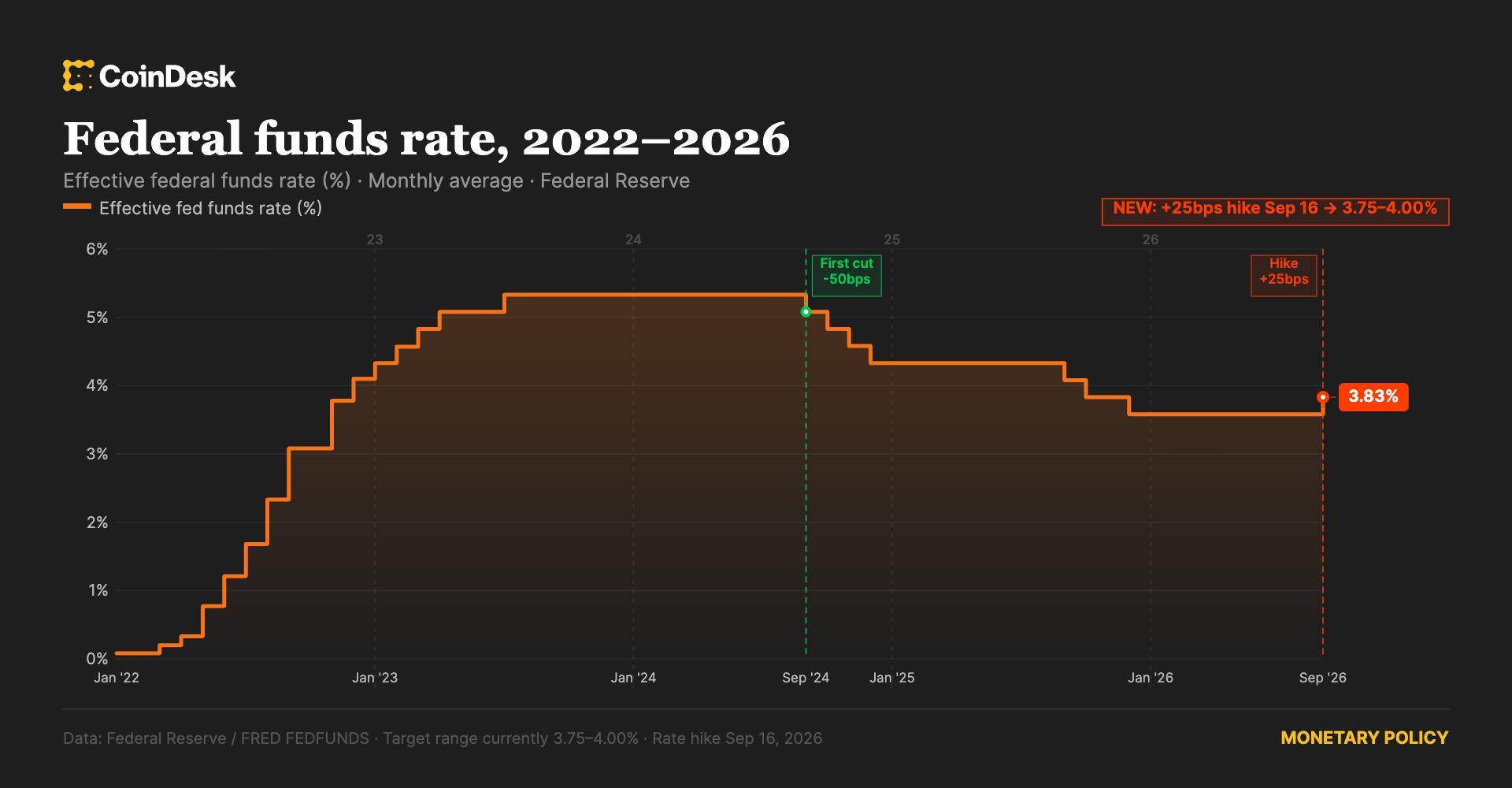
The U.S. Federal Reserve implemented a widely anticipated interest rate increase of 25 basis points on [Date of announcement, e.g., March 20, 2024], marking the first such adjustment since July 2023. This decision moves the Federal Reserve's target range for the federal funds rate to 3.75%-4.0%. The federal funds rate is a key benchmark that influences borrowing costs across the U.S. economy, affecting everything from mortgage rates to credit card interest. By raising this rate, the Federal Reserve aims to curb inflation by making borrowing more expensive, thereby slowing down economic activity and reducing demand. This move signals a shift in monetary policy, moving away from the accommodative stance maintained during periods of lower inflation and economic uncertainty. The Federal Reserve's mandate includes promoting maximum employment and stable prices, and this rate hike is a tool employed to achieve the latter.
Historically, the Federal Reserve has used interest rate adjustments as its primary mechanism for managing the nation's economy. Periods of high inflation often prompt the central bank to tighten monetary policy by increasing rates, while periods of economic slowdown or recession typically lead to rate cuts to stimulate growth. The decision to raise rates by 25 basis points, often referred to as a "quarter-point hike," is a common increment used by the Federal Reserve. Larger or smaller adjustments can be made depending on the perceived urgency and the economic conditions. The previous rate hike occurred in July 2023, indicating a period of sustained low rates prior to this latest adjustment. The Federal Reserve's Federal Open Market Committee (FOMC) is responsible for setting monetary policy, and its decisions are closely watched by financial markets, businesses, and consumers alike.
The implications of this rate increase are far-reaching. For consumers, it could mean higher interest payments on variable-rate loans, including mortgages, auto loans, and credit cards. Savers, however, might benefit from higher returns on savings accounts and certificates of deposit. Businesses may face increased costs for borrowing capital, potentially impacting investment and expansion plans. Higher interest rates can also strengthen the U.S. dollar, making American exports more expensive and imports cheaper. The Federal Reserve's communication following the rate decision, including statements from its Chair, provides crucial insights into the future path of monetary policy. Market participants will be analyzing economic data, such as inflation reports and employment figures, to anticipate future rate adjustments. The Federal Reserve's commitment to price stability is a cornerstone of its policy framework, and this rate hike underscores its determination to address inflationary pressures. The economic environment leading up to this decision has been characterized by [mention any specific economic conditions if available in the source, e.g., persistent supply chain issues, robust consumer spending, or rising energy prices], which have contributed to the inflationary concerns that the Federal Reserve is now actively addressing through its monetary policy tools. The FOMC's deliberations consider a wide array of economic indicators to make informed decisions that support the dual mandate of maximum employment and price stability.
Original source — read the full reporting at the publisher:
Read on CoinDeskGet the weekly AI digest
AI news + new model releases, weekly. Drafted by our agents, reviewed by humans.