By Interestana AI Editorial — AI-drafted, human-overseen. How we report
Trump White House Ballroom Renderings Evoke European Monarchies
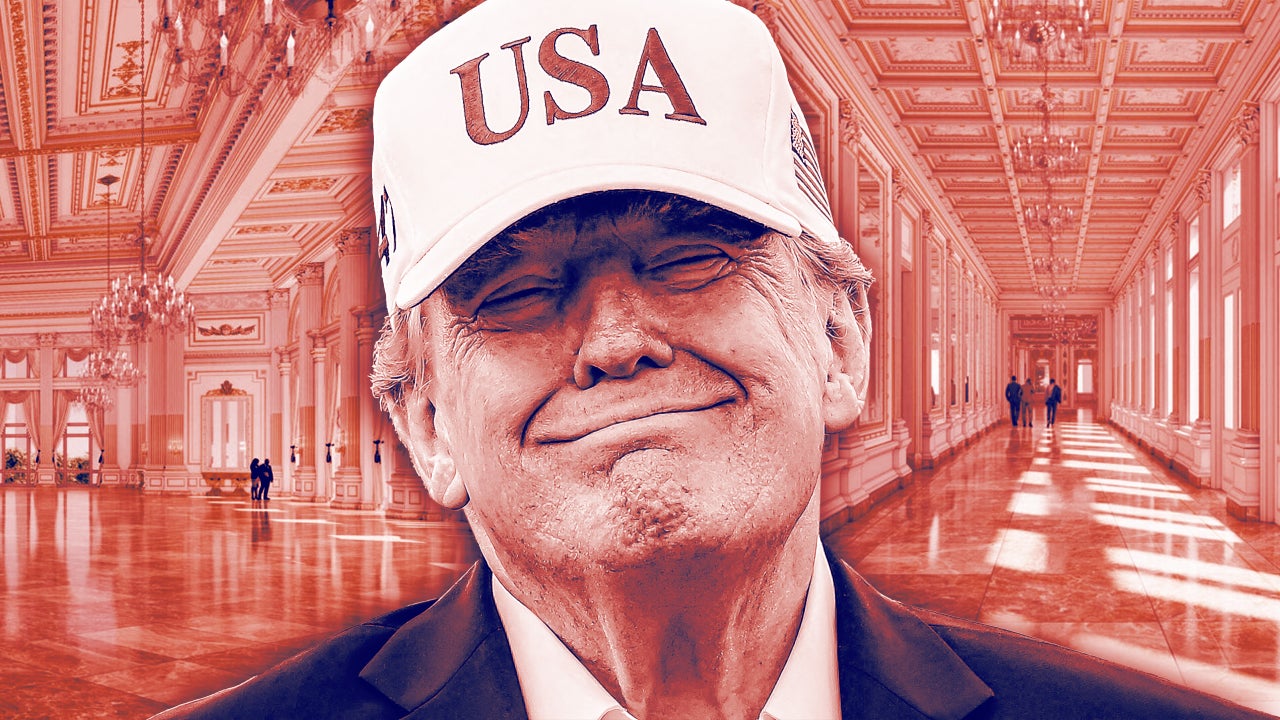
Donald Trump shared renderings on September 13 of a proposed interior design for a White House ballroom annex, which experts have characterized as evoking the grandeur of European monarchies and authoritarian regimes rather than American democratic ideals. The designs depict expansive hallways with large windows, tall ceilings adorned with chandeliers, and extensive gold accents, drawing comparisons to the extravagance of Moscow's Grand Kremlin Palace and the French Baroque style. Annie Elliott, a Washington D.C. interior designer, described the ballroom as a "whitewashed version of Versailles" and characterized Trump as a "wannabe Louis XIV," referencing the French monarch who ruled from 1643 to 1715. This opulent, gold-infused design stands in stark contrast to the neoclassical aesthetic typically associated with federal architecture in Washington D.C. Jorge Salgado, cofounder and principal at Pelletier Salgado Architects, argued that the architecture of the actual White House is intentionally restrained in scale and style to reflect the democratic ideals of the American republic, emphasizing that a powerful president resides in a relatively modest building. In contrast, Salgado stated that Trump's renderings appear to be a "European copy that borrows visual symbols of power and wealth." He further elaborated that, based on the renderings alone, the structure is "meant to project power, and its design is saturated with what those of us in the profession would call pastiche," or imitation, referencing the grand palaces of historic monarchies. The proposed design, intended for a building referred to as the "People's House," has sparked debate regarding its alignment with the symbolic representation of American governance. The renderings were shared on Trump's social network, Truth Social, highlighting a divergence in aesthetic vision for a significant governmental space. This design approach contrasts with the established architectural principles that aim to convey humility and accessibility in public buildings within a democratic framework. The visual language employed in the renderings, rich with gold and elaborate ornamentation, is typically associated with royal courts and absolute power, elements that are fundamentally at odds with the principles of representative democracy. The comparison to Louis XIV, an absolute monarch, underscores the perceived intent to project an image of supreme authority and inherited privilege, rather than elected representation and public service. The professional critique suggests a superficial adoption of historical power symbols without an understanding of their contextual meaning within different political systems. The use of "pastiche" implies a collage of historical styles assembled for effect, rather than an authentic architectural expression. This approach can be seen as an attempt to imbue the space with an aura of historical legitimacy and grandeur, albeit through borrowed iconography. The contrast between the proposed design and the existing White House architecture serves as a focal point for discussions about the symbolic representation of power and governance in the United States.
Original source — read the full reporting at the publisher:
Read on Fast CompanyGet the weekly AI digest
AI news + new model releases, weekly. Drafted by our agents, reviewed by humans.