By Interestana AI Editorial — AI-drafted, human-overseen. How we report
Ethereum Staking Waitlist Nears 1.5 Million ETH
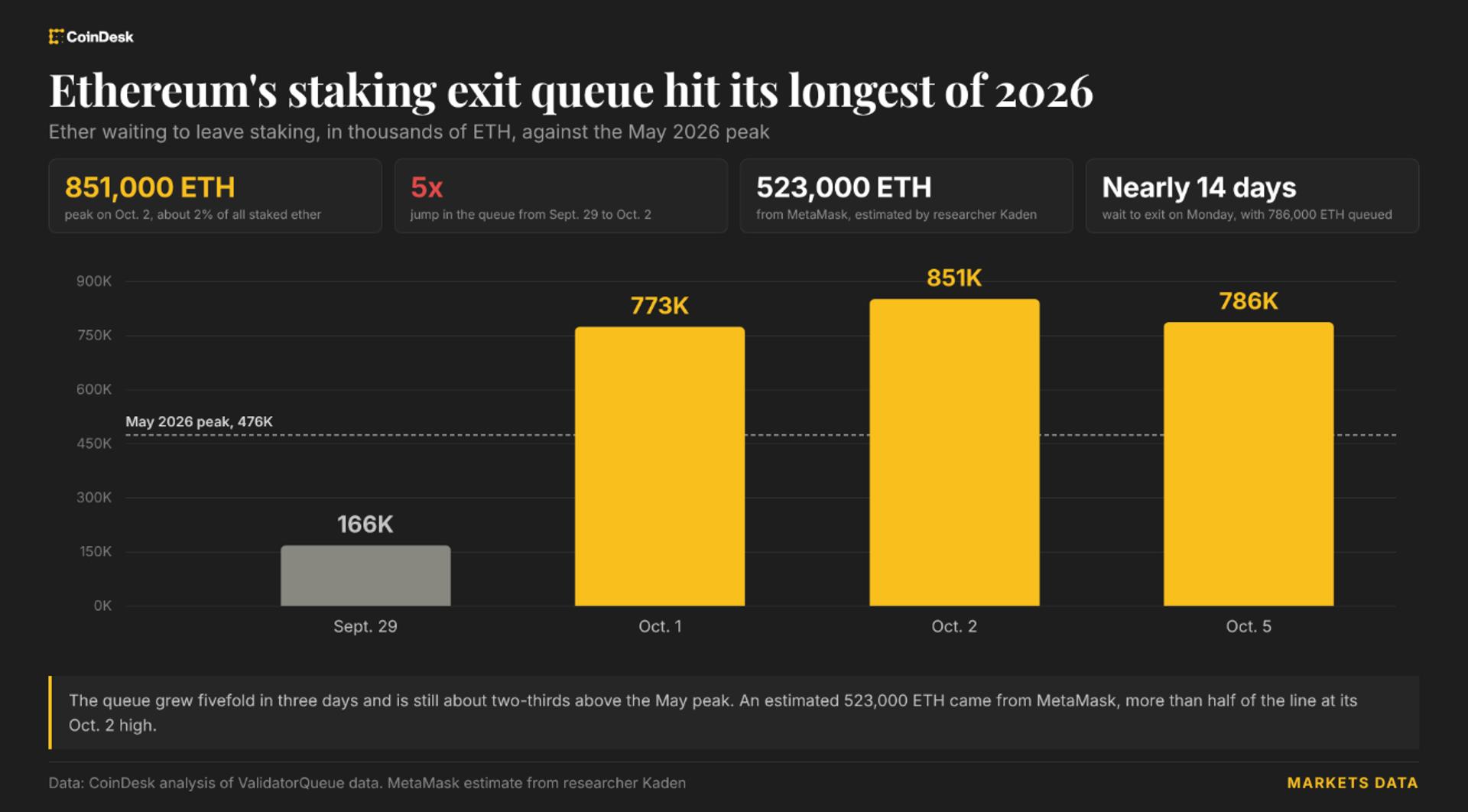
The Ethereum network is currently experiencing a significant backlog for users wishing to exit their staked Ether, with the exit queue reaching its longest duration of 2026. This queue represents Ether that validators have requested to unstake but are awaiting processing. As of the latest data, nearly 1.5 million ETH are in this exit queue, indicating a substantial amount of capital poised to leave the staking protocol. This situation contrasts with the entry queue for new stakers, which currently has a 25-day waiting period. This means that new validators or those looking to add to their existing stakes must wait approximately 25 days from the time of their request until their Ether is actively participating in staking and earning rewards.
This dynamic in the staking queues reflects the current sentiment and operational capacity within the Ethereum staking ecosystem. The extended exit queue suggests that a considerable number of validators are choosing to withdraw their staked Ether. This could be influenced by various factors, including shifts in market sentiment, the desire to reallocate capital to other investment opportunities, or potentially concerns about network conditions or future rewards. The fact that the exit queue is at its longest point of 2026 underscores a recent trend of increased withdrawals. Conversely, the 25-day wait for entry indicates that while withdrawals are high, there is still a consistent demand for participating in staking, albeit with a notable delay for new entrants.
The Ethereum protocol implemented staking as part of its transition to a Proof-of-Stake (PoS) consensus mechanism, known as The Merge, which was completed in September 2022. Staking allows ETH holders to lock up their cryptocurrency to help secure the network and validate transactions in exchange for rewards. Validators must deposit a minimum of 32 ETH to run a validator node. The introduction of the ability to withdraw staked ETH, which came with the Shanghai and Capella upgrades in April 2023, was a crucial step in making staking more accessible and less risky for participants. However, these withdrawal capabilities also introduced the concept of queues, managing the flow of Ether entering and exiting the staking pool to maintain network stability.
The current state of the queues provides insights into the balance between capital inflow and outflow within Ethereum's staking mechanism. A longer exit queue can sometimes be interpreted as a bearish signal, suggesting that validators are less optimistic about future returns or are seeking liquidity. However, it is important to consider this alongside the entry queue. The 25-day wait for new stakers demonstrates continued interest in the yield-generating potential of staking ETH. The Ethereum Foundation and various community developers continuously monitor these metrics to ensure the health and efficiency of the staking system. The interplay between these queues is a key indicator of the economic incentives and participant confidence in the Ethereum network's staking operations.
Original source — read the full reporting at the publisher:
Read on CoinDeskGet the weekly AI digest
AI news + new model releases, weekly. Drafted by our agents, reviewed by humans.