Asia Bonds Attract Global Funds Amid Fed Hike Concerns
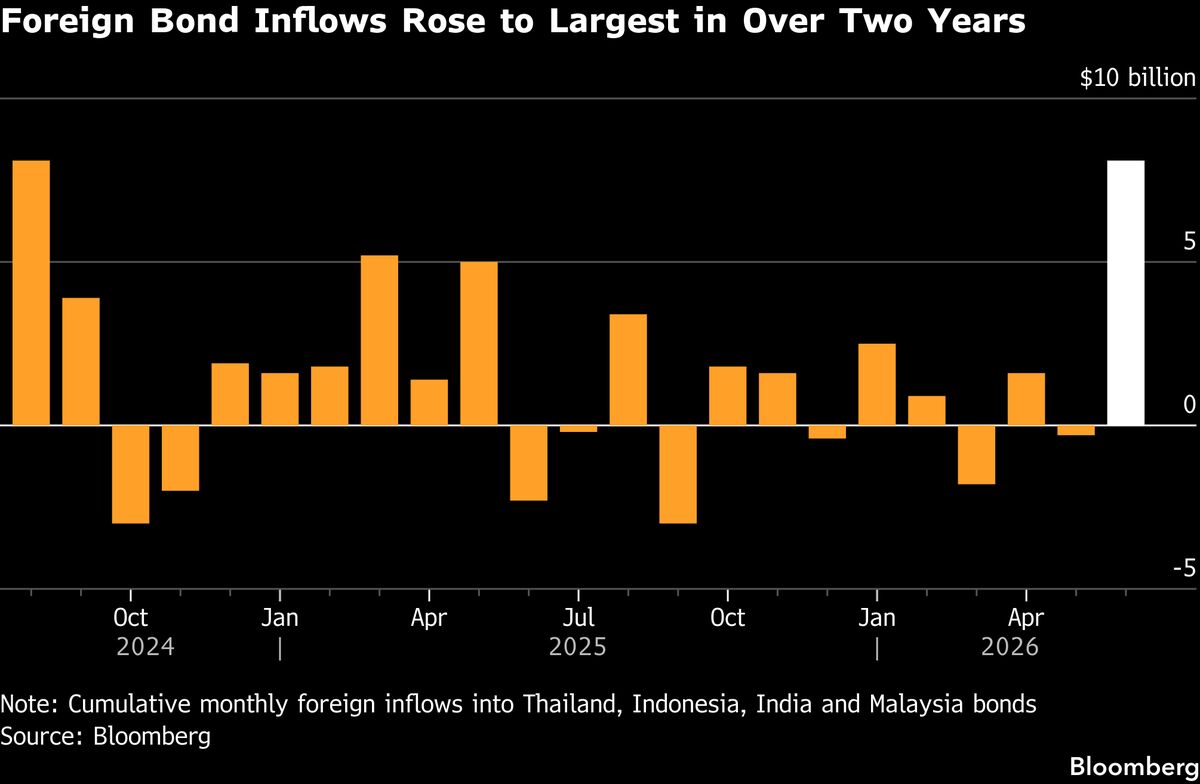
Foreign investors are increasing their investments in Asian emerging-market bonds, a trend that continues despite renewed concerns about potential interest rate hikes by the U.S. Federal Reserve. This influx of capital is attributed to the expectation that central banks across the Asian region will maintain elevated interest rates. Such a policy stance supports the attractiveness of these bonds by offering competitive yields.
The appeal of Asian debt is further bolstered by the relative stability and growth prospects within the region, even as global economic uncertainties persist. Analysts point to a widening yield gap between Asian bonds and those in developed markets, making emerging Asian debt a more compelling option for yield-seeking investors. This has led to significant inflows into countries like Indonesia, India, and South Korea, which are perceived as having sound economic fundamentals and proactive monetary policies.
While the Federal Reserve's monetary policy remains a key factor influencing global capital flows, investors appear to be differentiating between regions. The commitment of Asian central banks to manage inflation and maintain financial stability through higher rates is creating a favorable environment for their bond markets. This strategy aims to curb inflationary pressures and support currency stability, indirectly enhancing the attractiveness of local currency debt.
This renewed interest in Asian emerging-market bonds signals a growing confidence among global investors in the region's economic resilience. The sustained inflows suggest that the yield advantage offered by these bonds, coupled with regional economic stability, is outweighing the broader macroeconomic headwinds, including the potential for further tightening by major central banks like the Federal Reserve.
Original source — read the full reporting at the publisher:
Read on Bloomberg Markets