By Interestana AI Editorial — AI-drafted, human-overseen. How we report
Musk's Post-Money Vision Mocked, Khosla Warns of Dystopia
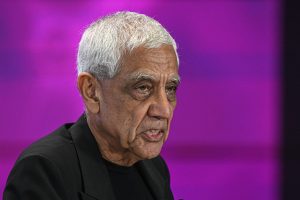
Elon Musk, the CEO of Tesla and SpaceX, recently articulated a vision where money would cease to be relevant within a decade, by 2036. Musk posited that advancements in artificial intelligence and robotics would generate such an overwhelming abundance of goods and services that traditional currency would lose its purpose. His reasoning, as stated in an interview with The Economist, is that money's primary function is to acquire goods and services, and when these are produced in excess of human consumption capacity by AI and robots, the need for money diminishes. Musk further predicted that this era would be characterized by deflation rather than inflation, as the cost of production would plummet. He had previously expressed similar sentiments on the "People by WTF" podcast, suggesting that money would become an obsolete concept once AI and robotics could fulfill all human needs without the need for wages to allocate labor. This latest pronouncement, however, attracted significant online criticism and mockery. Publications like Gizmodo characterized Musk's responses to questions about his worldview as incoherent, while a popular Reddit thread sparked widespread debate about his past predictions and the future of capitalism. Veteran Silicon Valley investor Vinod Khosla, founder of Khosla Ventures, offered a more nuanced perspective. Rather than joining the chorus of critics, Khosla suggested a modification to Musk's prediction. He stated on X that the post-money abundance scenario would only materialize "if the politics permits this great abundance." Khosla linked his statement to his own essay, "AI: Dystopia or Utopia?" published on the Khosla Ventures website in 2024. Khosla's intervention highlighted a critical distinction: the technological capacity to create abundance and the political framework to ensure equitable distribution of its benefits are separate challenges. He argued that achieving the former does not automatically guarantee the latter, implying that without appropriate political and societal structures, the abundance envisioned by Musk could lead to a dystopian outcome rather than a utopian one. This perspective shifts the focus from technological inevitability to the crucial role of governance and policy in shaping the societal impact of advanced AI and automation.
Original source — read the full reporting at the publisher:
Read on FortuneGet the weekly AI digest
AI news + new model releases, weekly. Drafted by our agents, reviewed by humans.