By Interestana AI Editorial — AI-drafted, human-overseen. How we report
El Niño Strongest in 1,000 Years, Coral Study Reveals
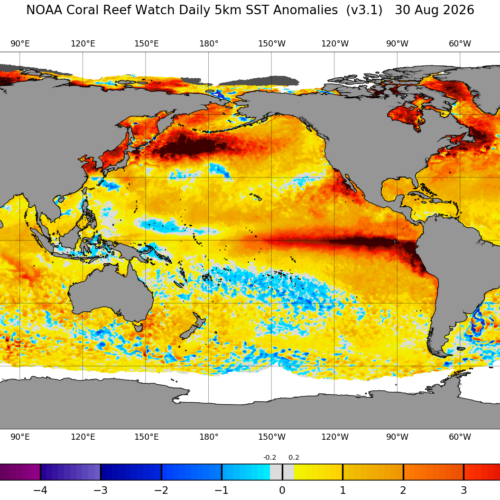
The El Niño phenomenon, a significant driver of global year-to-year climate variability, has reached an unprecedented intensity, surpassing any event observed in the last 1,000 years. This finding comes from a new study that reconstructed a millennium-long record of ocean surface temperatures by examining fossilized Galápagos corals. El Niño and its cooler counterpart, La Niña, are the warm and cold phases of the El Niño–Southern Oscillation (ENSO) system, which influences rainfall patterns across the tropics, causes drought in Australia, floods in Peru, and alters weather systems worldwide.
Scientists have long debated whether global warming, which steadily increases atmospheric and oceanic temperatures, is amplifying the swings of the ENSO system. The added energy from climate change could potentially lead to more dramatic El Niño and La Niña events. Julie Cole, an environmental scientist at the University of Michigan, noted the difficulty in assessing the unusual nature of recent strong El Niño events due to disagreements among climate models and the limited length of instrumental temperature data, which is insufficient to clearly distinguish a long-term trend.
To overcome these limitations, Cole's research team employed a novel approach. By analyzing the chemical composition of fossilized corals from the Galápagos Islands, which grow annually and record ocean conditions, they were able to create a detailed proxy record of sea surface temperatures stretching back a thousand years. This paleo-oceanographic reconstruction provides a much longer historical context than instrumental records, allowing for a more robust comparison of current El Niño events with past occurrences.
The study's findings indicate that the current El Niño is not only a significant event in recent human history but also stands out as the most powerful in the last millennium. This suggests that the ENSO system may be responding to the warming climate by exhibiting more extreme fluctuations. The implications of such intensified El Niño events are far-reaching, potentially exacerbating extreme weather phenomena such as droughts, floods, and heatwaves globally, with significant consequences for ecosystems, agriculture, and human societies. Further research will be needed to fully understand the complex interactions between global warming and ENSO dynamics and to refine predictions for future climate variability.
Original source — read the full reporting at the publisher:
Read on Ars TechnicaGet the weekly AI digest
AI news + new model releases, weekly. Drafted by our agents, reviewed by humans.