By Interestana AI Editorial — AI-drafted, human-overseen. How we report
Earth Microbes Survive Simulated Enceladus Ocean Conditions
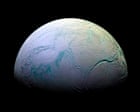
Microorganisms sourced from deep-sea hydrothermal vents off the coast of Japan have demonstrated their ability to survive simulated conditions mirroring those found in the subsurface ocean of Saturn's moon Enceladus. This finding, published in a recent scientific study, significantly bolsters the hypothesis that extraterrestrial life could exist within this icy celestial body. Enceladus has long been a prime candidate in the search for life beyond Earth due to the detection of plumes erupting from its surface, indicating the presence of liquid water. The experiment specifically recreated the high pressure, low temperature, and chemical composition expected within Enceladus's briny ocean, which lies beneath its thick icy crust. Researchers exposed the extremophilic microbes to these simulated conditions for an extended period, observing their resilience and survival rates. The organisms used in the study are known to thrive in environments on Earth characterized by extreme pressure and darkness, analogous to the conditions deep within Enceladus's ocean. This research provides tangible evidence that life, as we understand it, could potentially adapt and persist in such alien environments. The implications of this study extend to astrobiology, guiding future missions and the search parameters for detecting biosignatures on Enceladus and other ocean worlds in our solar system and beyond. The survival of these Earth microbes under simulated Enceladan conditions suggests that the necessary biological building blocks and energy sources might also be present in the moon's ocean, further fueling speculation about its habitability. Scientists are now more optimistic about the possibility of finding evidence of past or present life on Enceladus, a moon that continues to captivate the scientific community with its potential for harboring life. The study's success in demonstrating microbial survival under these specific extraterrestrial conditions marks a crucial step in understanding the limits of life and its potential distribution throughout the cosmos. Future research may focus on identifying specific metabolic pathways these microbes utilize to survive and whether similar processes could occur on Enceladus, potentially utilizing the moon's geological activity and chemical gradients for sustenance. The findings are particularly significant as they offer a concrete biological precedent for life in an environment previously considered highly speculative for its habitability. This research underscores the importance of studying Earth's extremophiles as analogues for potential extraterrestrial life, providing valuable insights into the conditions under which life might arise and persist elsewhere in the universe. The ongoing exploration of Enceladus, including missions that could sample its plumes or even land on its surface, will be informed by these experimental results, potentially leading to groundbreaking discoveries in the field of astrobiology.
Original source — read the full reporting at the publisher:
Read on The Guardian WorldGet the weekly AI digest
AI news + new model releases, weekly. Drafted by our agents, reviewed by humans.