By Interestana AI Editorial — AI-drafted, human-overseen. How we report
DRC Politician Beaten to Death After Ebola Awareness Radio Appearance
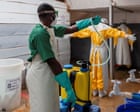
Marie-Celestin Karondwa, the acting president of the Union for Democracy and Social Progress (UDPS) party’s federal executive committee in Butembo, was tragically beaten to death on Sunday, September 27, 2026. His death occurred in the immediate aftermath of his participation in a local radio program where he actively promoted crucial measures aimed at preventing the spread of the Ebola virus. The UDPS federation in Butembo, a city that has recently emerged as a significant hotspot for the ongoing Ebola outbreak in the Democratic Republic of the Congo (DRC), issued a statement detailing the circumstances of the attack. According to the party's statement, as reported by Reuters, Karondwa was targeted and assaulted shortly after concluding his radio appearance, during which he had been disseminating vital public health information and advocating for preventative actions against the deadly disease.
The Union for Democracy and Social Progress (UDPS) is a foundational and influential political party within the Democratic Republic of the Congo, known for its historical role in the country's democratic transition. Karondwa's position as acting president of the federal executive committee in Butembo placed him in a leadership role within the party's local structure in a region critically affected by the epidemic. Butembo's designation as a new hotspot underscores a concerning escalation of Ebola cases in that specific geographical area, necessitating urgent and effective public health interventions and robust community engagement strategies.
This violent incident starkly illustrates the perilous environment that public health officials, political figures, and community leaders often navigate in regions grappling with severe disease outbreaks. The attack on Karondwa highlights the significant challenges faced by those attempting to disseminate essential information and implement control strategies during a public health crisis, where fear and misinformation can unfortunately lead to hostility. While the initial reports did not immediately detail the specific perpetrators or their precise motivations beyond the immediate context of his radio advocacy, the timing of the assault strongly suggests a direct causal link to his public health messaging. The UDPS federation's statement serves as the primary account of the events leading up to Karondwa's death. The incident raises profound questions about public trust in health authorities, the pervasive impact of misinformation, and the potential for extreme hostility directed towards individuals actively involved in managing and combating the Ebola epidemic. A thorough investigation into this attack is anticipated to be crucial for a comprehensive understanding of the situation and for implementing measures to prevent future violence against public health advocates and communicators in the DRC.
Original source — read the full reporting at the publisher:
Read on The Guardian WorldGet the weekly AI digest
AI news + new model releases, weekly. Drafted by our agents, reviewed by humans.