By Interestana AI Editorial — AI-drafted, human-overseen. How we report
Canine Cognition: Dogs' Brains Process Human Emotions, New fMRI Study Reveals
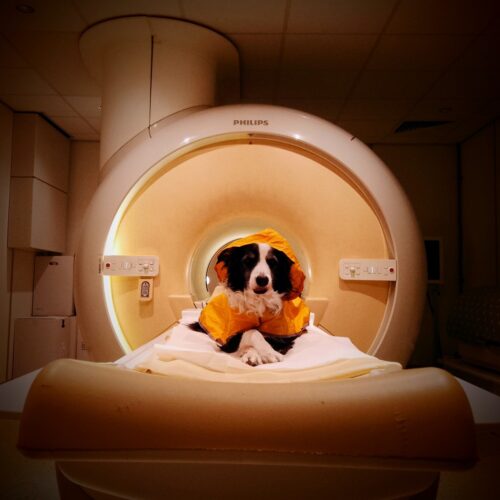
New research published in the journal *iScience* provides compelling evidence that dogs possess a sophisticated ability to interpret human emotions, identifying specific brain regions involved in this process. Utilizing functional magnetic resonance imaging (fMRI), a non-invasive neuroimaging technique that measures brain activity by detecting changes associated with blood flow, scientists observed canine brain responses to various human facial expressions. The study pinpointed a particular area within the canine brain that shows a distinct response to happy human facial expressions, such as a smile. This finding offers a deeper understanding of the neural mechanisms underlying how dogs perceive and react to positive human emotions.
Beyond recognizing happiness, the research also demonstrated that dogs can differentiate between negative human facial expressions, specifically identifying anger, sadness, and fear. This capability suggests a nuanced emotional processing in dogs, allowing them to discern a range of human affective states. Raúl Hernández-Pérez, a co-author of the study affiliated with the University of Vienna, emphasized the parallel between human and canine abilities in reading facial cues. "Humans are really good at picking up small details on the face, and so are dogs," Hernández-Pérez stated, highlighting the remarkable social and emotional intelligence of canines. The study aims to unravel the evolutionary adaptations that have equipped dogs with such advanced social and emotional understanding of humans.
This latest research builds upon a foundation of prior behavioral and neuroimaging studies. Previous behavioral experiments have already established dogs' sensitivity to human emotions conveyed through facial expressions. For instance, dogs have been observed to preferentially choose a container indicated by a human displaying a happy expression over one associated with expressions of fear or disgust. Earlier fMRI studies on dogs had also provided crucial insights. These investigations revealed that a specific region in the canine left temporal cortex, a part of the brain associated with auditory processing and memory, exhibited a stronger response to human faces compared to dog faces. Furthermore, these earlier studies noted greater activity in key brain structures like the caudate nucleus (involved in reward and motivation), the hippocampus (crucial for memory formation), and the amygdala (central to processing emotions, particularly fear) when dogs viewed human faces displaying emotions versus neutral expressions. The current *iScience* paper refines these findings by specifically detailing the processing of positive expressions and the differentiation of negative ones, offering a more granular map of how dogs' brains engage with the complex spectrum of human emotional signals. The implications of this work are significant for understanding the deep bond between humans and dogs, as well as the intricate interspecies communication that characterizes their relationship.
Original source — read the full reporting at the publisher:
Read on Ars TechnicaGet the weekly AI digest
AI news + new model releases, weekly. Drafted by our agents, reviewed by humans.