By Interestana AI Editorial — AI-drafted, human-overseen. How we report
Man's Shoulder Joint Disintegrated, X-ray Reveals
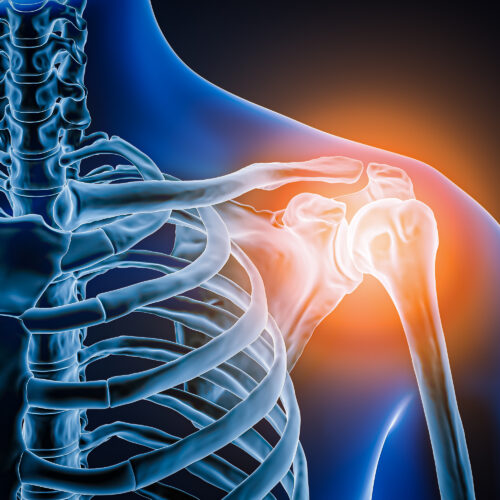
A 45-year-old construction worker presented to the emergency department with a severely swollen and increasingly painful right shoulder. Initial diagnostic imaging, an X-ray, revealed a startling absence: the man's entire shoulder joint was gone, seemingly disintegrated into small fragments. The shoulder joint, a critical ball-and-socket mechanism where the spherical head of the humerus (upper arm bone) articulates with the glenoid cavity of the shoulder blade, was entirely compromised. According to a case report published in the New England Journal of Medicine, the X-ray images demonstrated the complete absence of both the ball and an intact socket. The upper arm bone was detached from its joint, and the humeral head, the spherical portion of the humerus that forms the ball of the joint, was entirely missing. The headless humerus was found to be floating freely within the man's arm, disconnected from the rest of his upper body. Accompanying the X-ray findings, magnetic resonance imaging (MRI) further detailed the extent of the damage, revealing that the man's rotator cuff—a complex of muscles and tendons responsible for stabilizing the upper arm within the socket—was also destroyed. Specifically, three of the four primary rotator cuff tendons, including the supraspinatus, infraspinatus, and subscapularis tendons, exhibited full-thickness tears. The case report, published in the esteemed New England Journal of Medicine, highlighted the severe nature of the injury, which left the patient with a non-functional and severely compromised shoulder. The visual evidence from the X-ray, showing the destruction of the humeral head and the free-floating upper arm bone, underscored the unique and severe pathology observed in this patient. The implications of such a complete disintegration of a major joint are significant, necessitating complex medical intervention to address the pain, loss of function, and potential for further complications. The report does not detail the specific cause of this extreme disintegration, but the patient's occupation as a construction worker suggests a potential link to severe trauma or an underlying condition that predisposed the joint to such catastrophic failure. The New England Journal of Medicine is a peer-reviewed medical journal that publishes original research and clinical observations, making its reports highly credible within the medical community. The detailed imaging and anatomical descriptions provided in the case report offer valuable insights into rare and severe orthopedic injuries.
Original source — read the full reporting at the publisher:
Read on Ars TechnicaGet the weekly AI digest
AI news + new model releases, weekly. Drafted by our agents, reviewed by humans.