By Interestana AI Editorial — AI-drafted, human-overseen. How we report
Die Fledermaus Review: Strauss Staging Lacks Fizz
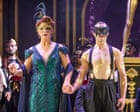
Opera Holland Park's new production of Johann Strauss's "Die Fledermaus" relocates the operetta from its traditional Viennese setting to London on New Year's Eve 1929. Director and choreographer Liam Steel's staging aims to capture the spirit of a Noël Coward-style farce, incorporating references to prominent figures of the era such as the Sitwells and the Mitfords. The production utilizes the Metropolitan Opera's 2013 revamped English version, featuring lyrics by Jeremy Sams and a new book by Douglas Carter Beane. This adaptation introduces contemporary humor and social commentary, including a playful allusion to Winston Churchill's supposed romantic entanglement with Ivor Novello, humorously described as "Musical" in an apocryphal anecdote. The intention behind this setting is to imbue the 19th-century operetta with the "anything goes" ethos characteristic of the late 1920s, resulting in dialogue that is at times described as "deliciously tart."
Despite the ambitious conceptual shift, the review suggests that the production struggles to generate sufficient "fizz" or energy, with the desired liveliness emerging only late in the performance. While the cast is noted as strong, with particular praise for Rebecca Bottone, Olivia Carrell, and Clare Presland, the overall impact of the staging is described as having "flourish and froth, but not enough fizz." The review implies that the operetta, which is historically credited with significantly boosting champagne sales, requires a comparable level of on-stage effervescence to be truly successful, a quality that this particular production reportedly lacks for much of its duration.
Johann Strauss II, the composer of "Die Fledermaus," was an Austrian composer known for his waltzes, polkas, and operettas. He was born in Vienna in 1825 and died in 1899. His works, including "The Blue Danube" and "Tales from the Vienna Woods," are iconic examples of the Viennese operetta genre, characterized by their melodic richness, lighthearted plots, and often satirical commentary on society. "Die Fledermaus," first performed in 1874, is one of his most enduring and popular works, celebrated for its intricate musical score and its witty portrayal of Viennese society's upper echelons, often involving themes of mistaken identity, seduction, and social masquerade. The operetta's enduring appeal lies in its blend of sophisticated music and comedic, often farcical, storytelling.
The adaptation by Jeremy Sams and Douglas Carter Beane seeks to modernize the operetta's narrative and language for contemporary audiences. Jeremy Sams is a British translator, lyricist, and composer, known for his work on various opera and musical theatre productions. Douglas Carter Beane is an American playwright and screenwriter, recognized for his witty and often anachronistic adaptations of classic stories. Their collaborative effort on "Die Fledermaus" aims to make the work more accessible and relevant by transplanting its core themes of social intrigue and revelry into a different historical and geographical context. The choice of London in 1929 provides a fertile ground for exploring themes of social liberation and artistic bohemianism, aligning with the operetta's inherent spirit of celebration and playful deception.
Original source — read the full reporting at the publisher:
Read on The Guardian CultureGet the weekly AI digest
AI news + new model releases, weekly. Drafted by our agents, reviewed by humans.