By Interestana AI Editorial — AI-drafted, human-overseen. How we report
Drought Exposes WWII German Warships on Danube River
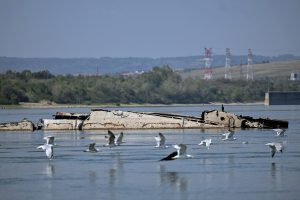
Record low water levels on the Danube River, Europe's second-longest waterway, have exposed the hulks of dozens of World War II German battleships. These emerging wrecks serve as a stark visual reminder of the ongoing drought crisis affecting Central and Eastern Europe. The diminished water levels have also pushed power plants to the brink of shutdown, prompting governments across the region to implement electricity conservation measures. Near the Serbian port of Prahovo, situated on the river border between Serbia and Romania, a rusty hull and a broken mast where a Nazi flag once flew are now visible. These vessels were part of Nazi Germany's Black Sea fleet, deliberately scuttled by German forces in September 1944 as they retreated from Romania and faced the advancing Soviet army. Historians estimate that up to 200 German warships were sunk in the Danube gorge near Prahovo to impede the Soviet advance through the Balkans. However, Nazi Germany surrendered in May 1945, months after the scuttling. The Serbian government, with financial backing from the European Union, has long sought to address the presence of these submerged warships. While some were removed by Communist Yugoslav authorities, the majority remain due to the explosives they are believed to still contain. The current low water levels are creating hazardous conditions for navigation on the Danube, which traverses ten European nations. Krsta Brandic, a resident of Prahovo, noted that the reduced water depth has significantly hampered ship traffic, stating that "the (big) ships can't pass anymore." Experts have attributed the unusually hot weather patterns, which contribute to the drought, to global warming and other environmental factors. The situation highlights the dual impact of climate change: environmental degradation and the uncovering of historical remnants. The ongoing efforts to manage the river's traffic and the potential risks associated with the submerged ordnance underscore the complex challenges posed by the drought. The visibility of these warships is a direct consequence of the severe drought impacting the region, a phenomenon linked by experts to broader climate change trends. The Danube River's strategic importance as a transport route is severely compromised by these low water levels, affecting trade and energy production. The historical context of these sunken vessels adds another layer of complexity, as their removal presents significant logistical and safety challenges due to potential unexploded ordnance. The Serbian government's initiative, supported by the EU, aims to mitigate these risks and restore navigability, but the current environmental conditions have accelerated the exposure of these wartime relics.
Original source — read the full reporting at the publisher:
Read on FortuneGet the weekly AI digest
AI news + new model releases, weekly. Drafted by our agents, reviewed by humans.