By Interestana AI Editorial — AI-drafted, human-overseen. How we report
D-Wave Advances Gate-Based Quantum Computing with Dual-Rail Qubit Entanglement
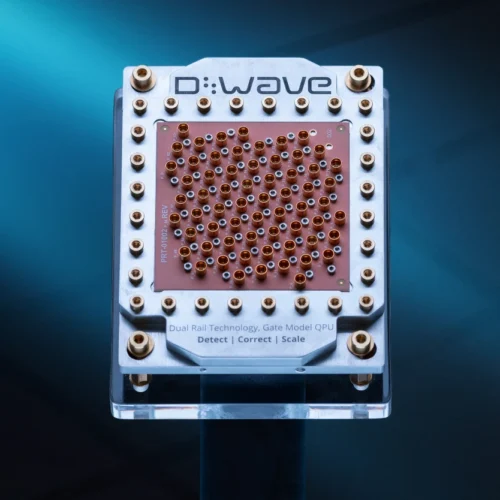
D-Wave Systems, a pioneering entity in the quantum computing sector since its inception in the late 20th century, is making significant strides in its transition towards gate-based quantum hardware. Unlike its initial focus on quantum annealers – specialized machines designed to tackle complex optimization problems rather than general-purpose quantum computation, a distinction from the gate-based systems pursued by giants like IBM and Google – D-Wave is now actively developing hardware that operates on different quantum principles. While its early quantum annealers shared some superficial resemblances with the qubits found in gate-based computers, their operational mechanisms were fundamentally distinct. A few years ago, D-Wave embarked on a strategic shift, beginning work on gate-based quantum hardware. This endeavor has seen the company explore various qubit technologies, notably adopting the fluxonium qubit. A crucial development in this strategic pivot was the acquisition of Quantum Circuits, a startup that emerged from Yale University. Quantum Circuits had been at the forefront of developing a promising qubit architecture known as the dual-rail qubit. This technology, also being pursued by Amazon, is distinguished by its inherent ability to make most errors exceptionally easy to detect, a feature that significantly simplifies the complex challenge of quantum error correction. On Wednesday, D-Wave announced the publication of a paper in the esteemed scientific journal Nature, detailing a critical milestone in the validation of this dual-rail qubit technology. The research showcases the successful entanglement of two dual-rail qubits. A paramount achievement highlighted in the paper is that this entanglement was accomplished without compromising the core advantage of the dual-rail qubits: their single-type nature, which facilitates straightforward detection. The ability to reliably entangle qubits is a foundational requirement for executing intricate quantum operations and algorithms, forming the bedrock of quantum computation. The dual-rail design is specifically engineered to address one of the most formidable obstacles in quantum computing: decoherence and the prevalence of errors. By enhancing the ease of error detection, D-Wave is proactively laying the groundwork for more effective and robust error correction mechanisms. These mechanisms are indispensable for unlocking the full transformative potential of quantum computation, enabling it to address previously intractable scientific and industrial challenges. The company's sustained investment in novel qubit architectures underscores the intensely competitive and rapidly evolving landscape of quantum computing research and development, where numerous organizations are exploring diverse technological pathways in pursuit of fault-tolerant quantum machines.
Original source — read the full reporting at the publisher:
Read on Ars TechnicaGet the weekly AI digest
AI news + new model releases, weekly. Drafted by our agents, reviewed by humans.