Czech Inflation Slows Below Target After Rate Hike
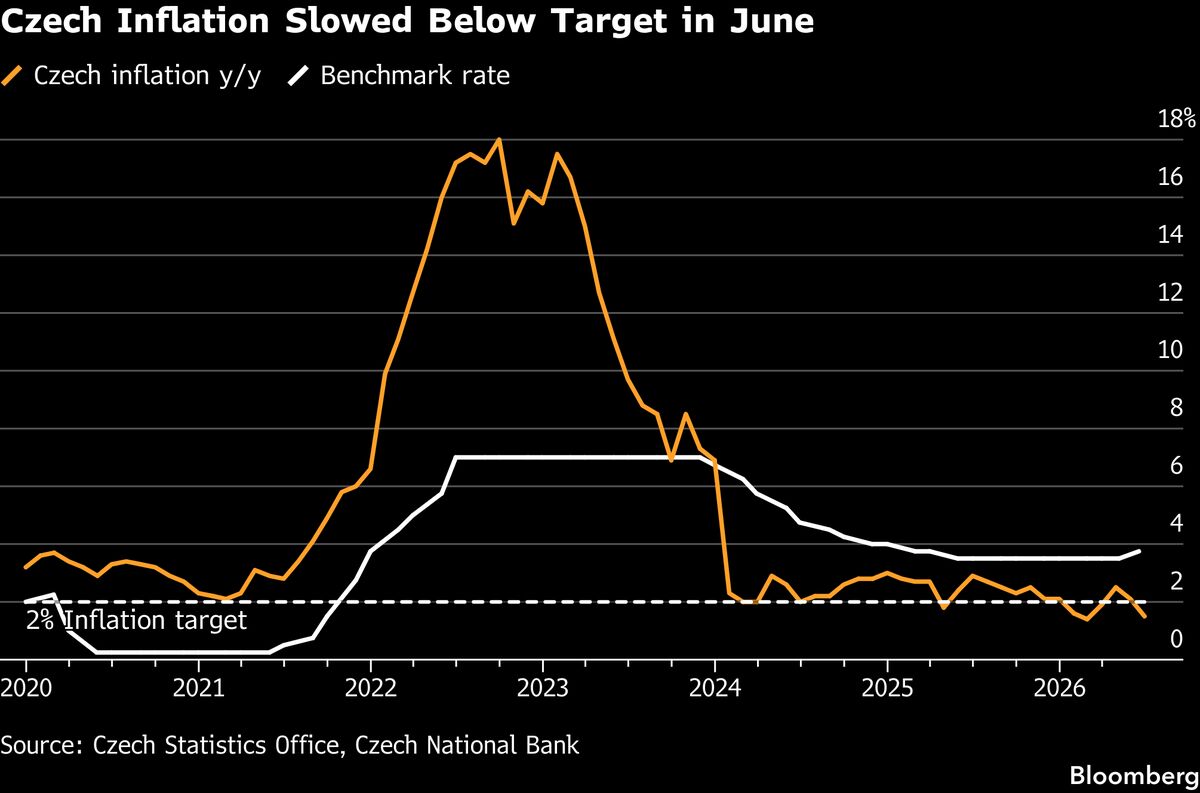
Czech inflation slowed more than expected in June, falling below the central bank's target rate. This deceleration presents a complex monetary policy dilemma for the Czech National Bank (CNB) following its recent interest rate increase.
The headline inflation rate decreased to 2.9% year-on-year in June, down from 3.7% in May. This figure undershot the CNB's own forecast of 3.1% and the consensus market expectation of 3.1%. The primary drivers behind this slowdown were attributed to a moderation in food prices and a decrease in fuel costs. Specifically, food prices saw a 0.9% year-on-year decline, a significant shift from previous months, while fuel prices dropped by 5.1%.
Core inflation, which excludes volatile items like energy and food, also showed signs of cooling, though it remains a concern for policymakers. Core inflation eased to 3.8% in June from 4.2% in May. Services inflation, a key indicator of underlying price pressures, remained elevated at 4.9%, indicating persistent demand in that sector. This persistent services inflation is a key factor that the CNB will likely monitor closely.
The Czech National Bank raised its key two-week repo rate by 50 basis points to 7.25% in late June, aiming to curb persistent inflation. The current inflation data suggests that the rate hike may be having a more immediate impact than anticipated, but the central bank will need to assess whether this trend is sustainable. The divergence between headline and core inflation, particularly the stickiness of services prices, means the CNB faces a delicate balancing act between ensuring price stability and avoiding an excessive slowdown in economic growth.
Original source — read the full reporting at the publisher:
Read on Bloomberg Markets