By Interestana AI Editorial — AI-drafted, human-overseen. How we report
Eyebrights: Sunny Healers and Parasitic Thieves
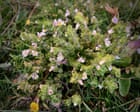
Eyebrights, known for their historical use in treating eye ailments, are now observed flowering in the short turf of Old Racecourse Common in Shropshire. These annual plants feature small flowers, measuring 4mm to 11mm, characterized by a violet hue, a white corolla marked with purple, and a distinct yellow central flash. The plant's common name reflects its traditional medicinal applications, suggesting a beneficial role in healing.
However, the eyebright also exhibits a parasitic nature, penetrating the roots of surrounding grasses to extract water and essential nutrients. This dual characteristic presents a paradox: a plant revered for its healing properties also acts as a subtle thief within its ecosystem. The complexity of eyebright species, with approximately 20 varieties found in Britain, some of which are endemic, makes them a challenging subject for botanical classification.
This genetic intricacy has led to their reputation as an arcane group of plants, posing a significant taxonomic puzzle for all but the most specialized botanists. One botanist even remarked that "Life’s too short to key out eyebrights," highlighting the difficulty in precisely identifying these species. The observation of eyebrights in their natural habitat underscores their ecological role, both as a visually appealing wildflower and as an organism with a complex parasitic relationship with its host plants.
Original source — read the full reporting at the publisher:
Read on The Guardian EnvironmentGet the weekly AI digest
AI news + new model releases, weekly. Drafted by our agents, reviewed by humans.