By Interestana AI Editorial — AI-drafted, human-overseen. How we report
Solar Eclipse Observed Despite Cloudy Skies in Co. Down
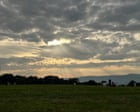
A deep partial solar eclipse occurred on a recent Wednesday, observed by a group of strangers in Lisnabreeny, County Down, who gathered with a sense of occasion. The poet Emily Dickinson's lines, "Eclipses be – predicted – / And Science bows them in –", resonated with the author as she navigated the Met Office's forecasts, which had presented a fluctuating outlook of hope and dismay in the days leading up to the event. This sentiment of anticipation, tempered by uncertainty, mirrored the experience of many awaiting the celestial spectacle. The author and others had scouted the local hills to find a commanding view of the western horizon, assessing the landscape on an ordinary sunlit evening. During this reconnaissance, swallows were observed skimming over stubble grass, and rooks were heard clamouring in the trees, painting a picture of typical rural life. At this point, the few individuals encountered by the author were unaware that a significant astronomical event, a deep partial solar eclipse, was imminent. The eclipse itself, though partially obscured by clouds, was still perceived as a phenomenon by those present. The gathering of strangers, united by the shared experience of witnessing the eclipse, underscored a collective appreciation for natural events, regardless of perfect viewing conditions. The presence of these individuals, who came together despite the lack of widespread public announcement or fanfare, highlights a shared human inclination to observe and acknowledge significant astronomical occurrences. The author's reflection on Dickinson's poetry further emphasizes the profound and often introspective impact of such events. The experience in Lisnabreeny suggests that the anticipation and shared observation of a celestial event can hold value even when external conditions, such as cloud cover, are not ideal. The article does not provide specific details on the exact percentage of the eclipse visible or the precise time it occurred, focusing instead on the personal and collective experience of witnessing the event amidst uncertain weather. The narrative emphasizes the 'sense of occasion' and the unexpected gathering of people, indicating a spontaneous community formed around the shared interest in the eclipse. The contrast between the predicted scientific event and the actual experience, influenced by the weather, forms a central theme. The author's engagement with Dickinson's poetry serves to frame the experience within a broader context of human observation and scientific understanding, acknowledging the role of prediction while celebrating the lived experience.
Original source — read the full reporting at the publisher:
Read on The Guardian EnvironmentGet the weekly AI digest
AI news + new model releases, weekly. Drafted by our agents, reviewed by humans.