By Interestana AI Editorial — AI-drafted, human-overseen. How we report
Melplash Show Features Cider Contest Amid Harvest Concerns
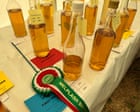
The Melplash Show, a significant agricultural event in Bridport, Dorset, featured its annual cider contest, drawing crowds interested in local produce and livestock. Amidst displays of pigs, cattle, and sheep, actor Martin Clunes presented one of his heavy horses, a strawberry roan gelding, in a parade ring. However, the focus for many attendees, including the author, shifted to the handicrafts and local produce tent, where a diverse array of local ciders were presented for judging. The contest showcased 36 entries, with bottles glowing in shades from palest amber to urinous gold, representing the variety of locally produced ciders.
The judging panel for the cider contest comprised two experts: Ross Mangles, a cider-maker from North Down Orchard, and James Crowden, a noted cider writer. Their tasting commenced early, beginning at 8:30 AM. To sustain their palates through the extensive sampling, the judges were equipped with a block of blue-veined cheddar cheese, a packet of cream crackers, and a glass of water. By 10:00 AM, they had completed their evaluation of all 36 submitted ciders. Upon the author's arrival for the results, the winning bottles were already partially consumed, indicating the judges' thorough assessment and enjoyment. Both Ross Mangles and James Crowden expressed an upbeat sentiment regarding the quality of the entries, despite underlying concerns about the current year's apple harvest.
The Melplash Show serves as a platform for agricultural communities to display their best produce and livestock, fostering a sense of local pride and competition. The cider contest, in particular, highlights the artisanal production methods and the quality of apples grown in the Dorset region. The presence of established figures like Ross Mangles and James Crowden lends significant credibility to the competition, ensuring that the judging process is rigorous and fair. Their early start and methodical approach, supported by simple accompaniments, underscore the seriousness with which they approach their task of identifying the finest local ciders. The event, therefore, not only celebrates the end product but also implicitly acknowledges the agricultural efforts that lead to its creation, from orchard cultivation to the final pressing and fermentation.
While the atmosphere at the show was one of celebration and appreciation for local bounty, the mention of concern regarding this year's apple harvest introduces a note of caution. Agricultural yields are subject to numerous factors, including weather patterns, pest infestations, and disease outbreaks. A less-than-ideal harvest could impact the availability and quality of apples for cider production in the coming seasons, potentially affecting future contests and the livelihoods of local cider-makers. The success of the 36 entries in this year's competition, therefore, might represent a culmination of efforts from a challenging growing season. The positive outlook from the judges, despite these potential challenges, suggests resilience and skill within the local cider-making community. The Melplash Show, in its entirety, provides a comprehensive snapshot of rural life and the agricultural economy of Dorset, with the cider contest offering a specific lens through which to view the region's produce and the dedication of its producers.
Original source — read the full reporting at the publisher:
Read on The Guardian EnvironmentGet the weekly AI digest
AI news + new model releases, weekly. Drafted by our agents, reviewed by humans.