By Interestana AI Editorial — AI-drafted, human-overseen. How we report
Field Horsetail Plant Exhibits Prehistoric Resilience
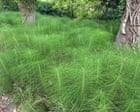
The field horsetail, scientifically known as *Equisetum arvense*, is a plant that predates the dinosaur era, showcasing remarkable resilience and unique physical characteristics. This ancient species, often found along rural roadsides, presents a striking contrast to drought-stricken landscapes, maintaining a lush, verdant appearance even when surrounding vegetation has turned brown and yellow. Its common name, 'field horsetail,' derives from its appearance, which has been likened to a toilet brush due to the bristly texture of its foliage. Upon closer inspection, the plant's stems are not soft but rather wiry and rough, a texture attributed to the high concentration of abrasive silicon within its bristles. This silicon content gives the plant a sandpaper-like quality, leading to another common name, 'scouring rush.' Historically, this abrasive property made *Equisetum arvense* a valuable tool for cleaning and polishing. Its hollow, jointed stems can be separated at their junctions and reassembled, similar to children's tubular pipes, allowing for simple construction or play.
The resilience of the field horsetail is a key characteristic that has allowed it to survive for millions of years, outlasting numerous geological and climatic shifts. Its ability to thrive in diverse conditions, including arid environments where other plants struggle, points to sophisticated survival mechanisms. While the provided text focuses on the plant's physical attributes and historical uses, its ecological significance and evolutionary history are vast. *Equisetum arvense* belongs to the division Equisetophyta, a group of plants that were once dominant in ancient forests. Modern horsetails are the sole surviving members of this once-diverse lineage, highlighting their evolutionary success. The plant's ability to reproduce both sexually via spores and asexually through underground rhizomes further contributes to its hardiness and widespread distribution. The silicon content, while providing abrasive qualities, also plays a role in the plant's structural integrity and defense against herbivores. The hollow stems are not only useful for structural purposes but also facilitate gas exchange and transport within the plant. The texture and composition of the horsetail make it an unusual yet fascinating subject of natural observation, a living testament to ancient plant life that continues to flourish in the modern world.
Original source — read the full reporting at the publisher:
Read on The Guardian EnvironmentGet the weekly AI digest
AI news + new model releases, weekly. Drafted by our agents, reviewed by humans.