Chip Stocks Start Q3 With Worst 2-Day Selloff in a Month
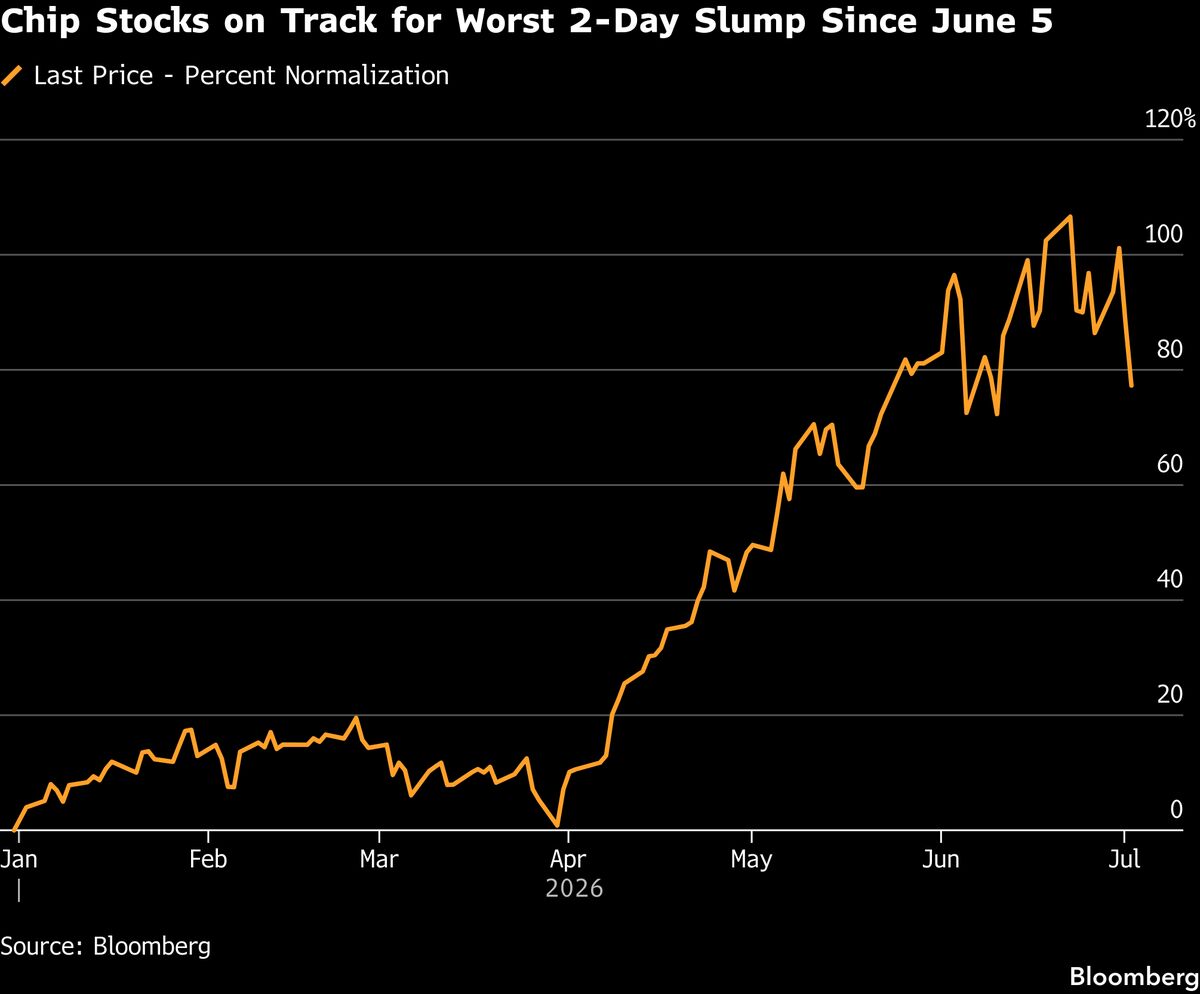
The semiconductor industry experienced a significant downturn at the commencement of the third quarter, marking its most substantial two-day selloff in approximately four weeks. This decline has affected a broad spectrum of chip manufacturers and related technology firms. The downturn began on Monday, July 1, 2024, and continued into Tuesday, July 2, 2024, signaling investor caution or a reassessment of valuations within the sector. While specific catalysts for the sharp decline were not immediately detailed, the broader market sentiment and sector-specific performance metrics are under scrutiny. This period of weakness follows a strong performance in the first half of the year for many semiconductor companies, driven by demand for AI-related hardware and robust consumer electronics markets. The current selloff suggests a potential shift in investor focus or concerns about future demand, supply chain dynamics, or macroeconomic headwinds. Analysts are closely monitoring the sector for signs of a sustained trend or a brief correction. The performance of chip stocks is often seen as a bellwether for the broader technology industry and global economic health due to the pervasive nature of semiconductors in modern technology and manufacturing. The next few trading days will be critical in determining whether this decline represents a temporary dip or the beginning of a more prolonged correction for the chip industry. Investors are evaluating earnings reports and forward guidance from key companies to gauge future prospects. The impact of geopolitical tensions and ongoing trade policies also remains a factor influencing investor decisions in this capital-intensive industry. The industry's reliance on advanced manufacturing processes and global supply chains makes it particularly sensitive to external economic and political factors. This initial dip in the third quarter could influence investment strategies and capital allocation for the remainder of the year.
Original source — read the full reporting at the publisher:
Read on Bloomberg Markets