By Interestana AI Editorial — AI-drafted, human-overseen. How we report
Xi Jinping Cultivates Middle East Ties in Egypt Visit
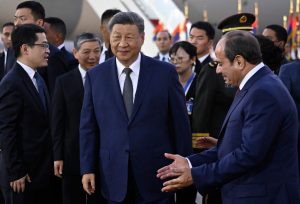
Chinese President Xi Jinping visited Egypt this week, engaging in discussions with President Abdel Fattah el-Sissi to bolster economic and diplomatic relations. This visit carries significant subtext, as China, a primary global rival to the United States, actively cultivates relationships with key American allies in the Middle East. Xi's objective is to present China as a stabilizing force in the region, offering an alternative to the United States' long-standing military engagements. This strategy aims to highlight China's growing influence amidst a rapidly evolving geopolitical landscape. Amr Hamzawy, director of the Carnegie Middle East Program, noted in a paper co-authored with Kathryn Selfe that "China continues to build up its soft power reserves while the United States self-sabotages its own stock." Xi arrived in Cairo on Tuesday evening, receiving a formal welcome with Chinese and Egyptian flags and a red-carpet ceremony attended by President el-Sissi and military guards. During their wide-ranging talks on Wednesday, Xi advocated for joint opposition to "unilateralism and acts of bullying," as reported by China's state-run Xinhua news agency. He also emphasized the importance of bilateral cooperation towards establishing a "more just and equitable global governance system." This trip marks Xi's first visit to Egypt in a decade and his first to the region since December 2022, when he visited Saudi Arabia. President el-Sissi, conversely, has made multiple visits to China in recent years. To commemorate 70 years of diplomatic relations between Egypt and China, both leaders published opinion pieces in Egypt's state-run newspapers on Tuesday. Xi's piece highlighted the potential for Beijing and Cairo to "expand the scope of pragmatic collaboration" through development initiatives. President el-Sissi's contribution lauded the enduring friendship and mutual respect between the two nations, underscoring shared aspirations for global peace and prosperity. The visit underscores China's strategic intent to deepen its economic and political partnerships across the Middle East, leveraging its economic prowess and non-interventionist foreign policy narrative to gain influence. This approach contrasts with the U.S. strategy, which has historically involved significant military presence and security commitments in the region. China's engagement aims to foster a multipolar world order where its role as a mediator and economic partner is increasingly recognized. The discussions also touched upon potential areas for increased trade and investment, with both leaders expressing optimism about future collaborations in sectors such as infrastructure, renewable energy, and technology. The visit signifies a broader trend of China expanding its diplomatic and economic footprint beyond its traditional sphere of influence, particularly in regions where Western influence is perceived to be waning or undergoing re-evaluation.
Original source — read the full reporting at the publisher:
Read on FortuneGet the weekly AI digest
AI news + new model releases, weekly. Drafted by our agents, reviewed by humans.