By Interestana AI Editorial — AI-drafted, human-overseen. How we report
UK Parliament Investigates Eurovision Entry Failures
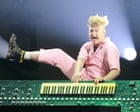
The United Kingdom's House of Commons' digital, culture, media and sport select committee has announced that it will investigate the recurring poor performance of UK entrants in the Eurovision Song Contest. This inquiry, part of the committee's "State of Play" agenda for the 2026-27 period, aims to understand the reasons behind the nation's frequent low placings in the international competition. Dame Caroline Dinenage, the chair of the committee, described the UK's Eurovision entries as "dismal," a term considered parliamentary language for significant underperformance. The committee's decision to dedicate parliamentary time to this issue has been met with skepticism, with some suggesting it is a "trifling matter" not warranting the attention of the House of Commons.
The rationale for the inquiry is supported by a history of disappointing results for the UK at Eurovision. Apart from notable successes such as Sam Ryder, who achieved second place in 2022, and Jade Ewen, who finished fifth in 2009, the UK has consistently ranked near the bottom of the scoreboard in recent decades. Specific examples of poor performance include coming last in 2021 and 2026, second to last in 2023, and ranking 19th and 18th in 2025 and 2024, respectively. In four of these instances, the UK entrant received zero public votes, highlighting a significant disconnect with the voting audience.
The article suggests that instead of scrutinizing these perceived failures, the UK should embrace its role as an "underdog" in the competition. It posits that the nation's cultural affinity for underdogs might offer a different perspective on these results. The inquiry's focus on "dismal" performances implies a desire for improvement and a search for strategic or creative reasons behind the lack of success. However, the author questions the utility of such an investigation, implying that the resources and attention could be better directed elsewhere. The Eurovision Song Contest, while a significant cultural event for many European nations, is often viewed through a lens of national pride and competitive spirit, making the UK's consistent underperformance a recurring topic of discussion and, now, parliamentary interest.
The "State of Play" inquiry by the digital, culture, media and sport select committee is a formal parliamentary process designed to examine various aspects of the UK's digital, media, and sporting landscape. By including the Eurovision Song Contest's performance in its agenda, the committee signals a recognition of the event's cultural impact and the public interest in its outcomes. The committee's findings could potentially lead to recommendations for the UK's approach to future Eurovision participation, although the article expresses doubt about the necessity or efficacy of such intervention. The focus on "dismal" results and the lack of public votes underscores the depth of the perceived problem that the committee intends to explore.
Original source — read the full reporting at the publisher:
Read on The Guardian CultureGet the weekly AI digest
AI news + new model releases, weekly. Drafted by our agents, reviewed by humans.