By Interestana AI Editorial — AI-drafted, human-overseen. How we report
Hamas Disarmament Plan Faces Obstacles, Offers Gaza Hope
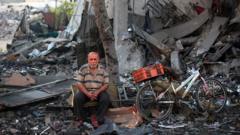
A proposed plan for Hamas to disarm faces substantial political and military obstacles, yet it represents a rare source of hope for the future of Gaza. The complexities arise from the ongoing realities of war, deep-seated political divisions, a complete lack of trust between parties, the devastating loss of thousands of lives, and the widespread destruction of Gaza's infrastructure. These factors combine to make any potential agreement exceptionally complicated to negotiate and implement. The plan, as outlined, requires Hamas to surrender its weapons and dismantle its military capabilities, a move that would fundamentally alter the power dynamics in the region. However, the path to achieving this is fraught with peril, as it necessitates overcoming decades of conflict and animosity.
Key challenges include the verification of disarmament, ensuring that Hamas does not retain hidden arsenals or the capacity to rearm. The political landscape is further complicated by the fragmented nature of Palestinian leadership and the differing objectives of regional and international actors involved in mediating or influencing the situation. The sheer scale of destruction in Gaza means that any post-disarmament scenario would require massive reconstruction efforts, coupled with robust security guarantees for the civilian population. Without a clear and viable political horizon for Palestinians, the incentive for Hamas to disarm voluntarily is significantly diminished. The plan's success hinges on the establishment of a legitimate and effective governing body in Gaza that can provide security and essential services, thereby addressing the root causes of the conflict.
Furthermore, the concept of "disarmament" itself is subject to interpretation and negotiation. It could range from the complete surrender of all weaponry to a phased reduction of military capacity. The international community's role in facilitating this process, potentially through peacekeeping forces or monitoring mechanisms, will be crucial. However, the willingness of various parties to cede control and trust external oversight remains a significant question mark. The absence of a comprehensive peace process that addresses the broader Israeli-Palestinian conflict also casts a shadow over the feasibility of a localized disarmament agreement. Without a broader framework for a two-state solution or a similar political resolution, any disarmament of Hamas could be viewed as a temporary measure rather than a lasting step towards peace.
Despite these formidable challenges, the mere existence of a plan for Hamas to disarm offers a potential pathway, however narrow, towards de-escalation and a more stable future for Gaza. It provides a focal point for diplomatic efforts and a potential basis for international engagement. The hope lies in the possibility that, through sustained diplomatic pressure, incentives, and a clear vision for post-conflict governance, a disarmament process can be initiated. This would require unprecedented cooperation among all stakeholders, including the Palestinian Authority, regional powers, and the international community, to create an environment where disarmament is not only possible but also serves as a foundation for lasting peace and reconstruction in Gaza. The current situation in Gaza, marked by humanitarian crisis and ongoing conflict, underscores the urgent need for such initiatives, even with their inherent difficulties.
Original source — read the full reporting at the publisher:
Read on BBC World NewsGet the weekly AI digest
AI news + new model releases, weekly. Drafted by our agents, reviewed by humans.