By Interestana AI Editorial — AI-drafted, human-overseen. How we report
Dodik Declares Party Victory in Bosnian Election
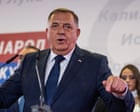
Bosnian Serb nationalist politician Milorad Dodik declared victory for his party in a Bosnian election on October 4, 2026. The election was significantly shaped by prevailing economic pressures, the potential accession of Bosnia and Herzegovina to the European Union, and deep-seated ethnic tensions that have historically divided the country since the conclusion of its devastating 1992-1995 war. Dodik, a prominent pro-Russia figure, exerted considerable influence over the electoral campaign, despite not being a candidate on the ballot himself. His campaign was characterized by fervent separatist rhetoric, which has heightened concerns about renewed instability within Bosnia and Herzegovina. The political landscape in Bosnia and Herzegovina is complex, with the country composed of two semi-autonomous entities: the Federation of Bosnia and Herzegovina and Republika Srpska, alongside the Brčko District. This intricate structure often fuels political friction and complicates national governance. Dodik's political base is primarily within Republika Srpska, where he has served as president and prime minister, advocating for closer ties with Russia and often challenging the authority of the central Bosnian government and international institutions overseeing the peace process. His electoral success, even without direct candidacy, underscores his enduring influence and the persistent ethnic divisions within the nation. The European Union has consistently expressed its commitment to Bosnia and Herzegovina's integration, offering a pathway for economic and political reform, but progress has been hampered by internal political disagreements and the ongoing influence of nationalist agendas. Dodik's electoral declaration signals a continuation of his political dominance and his alignment with policies that often diverge from the EU's integrationist agenda. The outcome of this election is expected to have significant implications for regional stability and the future trajectory of Bosnia and Herzegovina's relationship with both the European Union and Russia. The international community, including the United States and the European Union, has closely monitored the electoral process, emphasizing the importance of democratic principles and the preservation of Bosnia and Herzegovina's sovereignty and territorial integrity. Dodik's victory for his party, the Alliance of Independent Social Democrats (SNSD), reinforces his position as a key political player in the region, with his pronouncements and actions likely to continue shaping the political discourse and inter-ethnic relations in Bosnia and Herzegovina.
Original source — read the full reporting at the publisher:
Read on The Guardian WorldGet the weekly AI digest
AI news + new model releases, weekly. Drafted by our agents, reviewed by humans.