Treasuries Rally on Weak Jobs Data
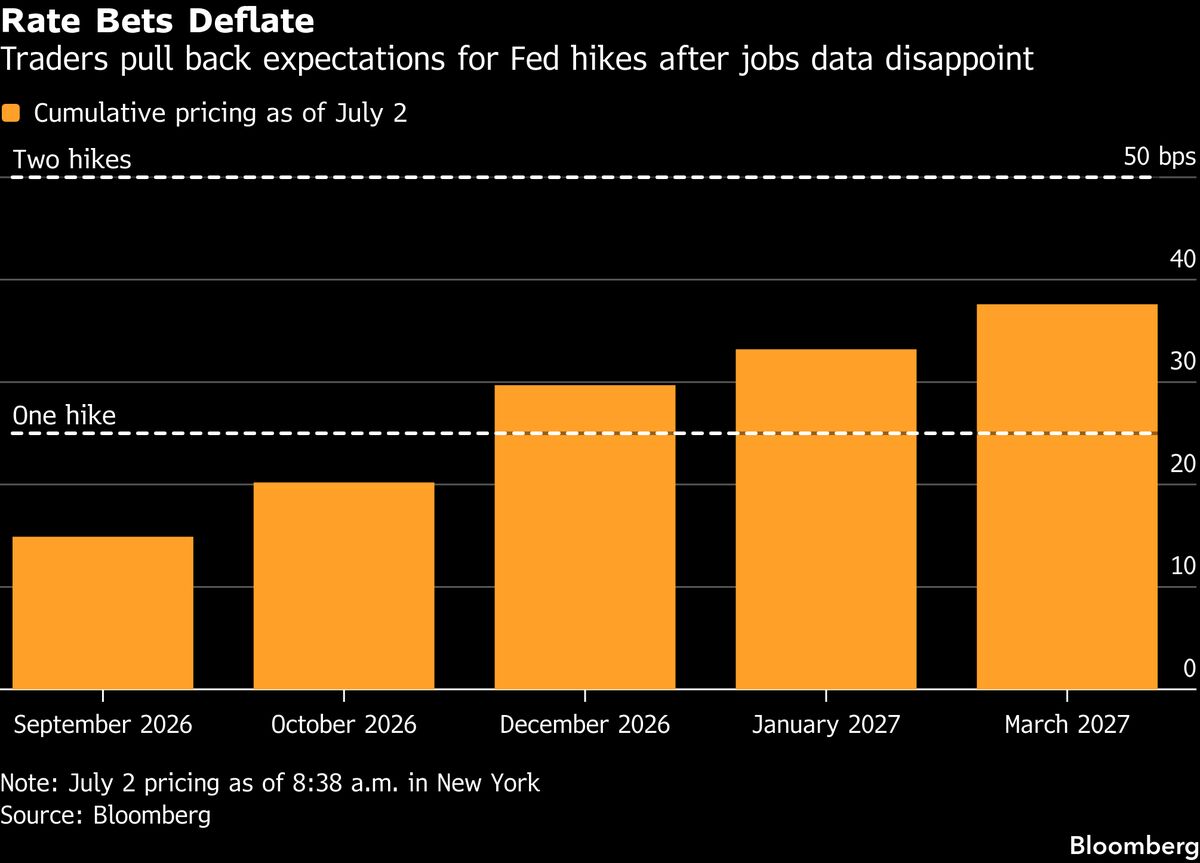
US Treasury bonds experienced a significant rally following the release of a weaker-than-expected jobs report, prompting traders to reassess the likelihood of future interest rate hikes by the Federal Reserve. The report indicated a slowdown in the labor market, which is a key indicator closely monitored by the central bank for signs of economic overheating or cooling.
Specifically, the number of jobs added in the latest reporting period fell short of consensus forecasts, and other labor market indicators such as wage growth and labor force participation also showed signs of moderation. This data suggests that the Federal Reserve's previous monetary policy tightening measures may be having a more pronounced effect on the economy than initially anticipated. Consequently, market participants have adjusted their expectations, with a reduced probability now assigned to a further increase in the federal funds rate.
The shift in market sentiment has led to a decrease in yields across the Treasury curve, particularly for shorter-dated maturities that are more sensitive to immediate monetary policy decisions. Bond prices move inversely to yields, meaning that as yields fell, bond prices rose. This rally in the bond market reflects a broader investor sentiment that the Federal Reserve may be nearing the end of its rate-hiking cycle, or potentially even considering rate cuts in the future if economic conditions continue to soften.
Analysts suggest that this development could have implications for other asset classes, potentially leading to a more favorable environment for equities if borrowing costs stabilize or decline. However, the Federal Reserve's future actions will remain data-dependent, and subsequent economic reports will be crucial in shaping the market's outlook on monetary policy. The central bank has consistently emphasized its commitment to bringing inflation back to its 2% target, and any policy decisions will be guided by this objective and a comprehensive assessment of economic conditions.
Original source — read the full reporting at the publisher:
Read on Bloomberg Markets