By Interestana AI Editorial — AI-drafted, human-overseen. How we report
EU Quarter Square Redevelopment Becomes 'Frying Pan'
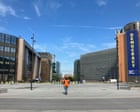
The ambitious redevelopment plan for Schuman Square, situated at the heart of the EU quarter in Brussels, has fallen short of its initial vision, with critics describing the outcome as "Europe's largest frying pan." Originally conceived as an "urban agora" – a greener, calmer meeting place intended to symbolize the "heart of the European project" – the project has been hampered by political wrangling and escalating costs. The transformation was meant to convert a traffic-clogged, nondescript roundabout into a vibrant public space. While the number of cars has been reduced and the area has been remodelled with smart grey paving, a key element, a steel canopy with a green roof, was never constructed. This omission has contributed to the perception of a stark, concrete expanse with insufficient greenery and shade, a stark contrast to the intended design. The project's leadership was overseen by the Brussels government, with former heads expressing high hopes for its symbolic significance. The failure to realize the full architectural vision has led to a blame game among various stakeholders involved in the complex urban planning and political landscape of the EU's administrative center. The rising costs associated with such large-scale urban renewal projects in major European capitals are a recurring challenge, often leading to compromises on design elements or delays in completion. The Schuman Square project highlights the difficulties in balancing ambitious urban design aspirations with the practicalities of political consensus, budgetary constraints, and construction realities. The current state of the square, characterized by its expansive paving and lack of substantial green features, fails to evoke the intended sense of a lively, welcoming public forum. Instead, it presents a functional but aesthetically uninspired space that has drawn considerable criticism from residents and observers alike, who had anticipated a more engaging and environmentally conscious urban environment. The unfulfilled promise of a shaded, green canopy underscores the disconnect between the initial architectural renderings and the final built form, leaving a legacy of unrealized potential in a prominent European location.
Original source — read the full reporting at the publisher:
Read on The Guardian EnvironmentGet the weekly AI digest
AI news + new model releases, weekly. Drafted by our agents, reviewed by humans.