By Interestana AI Editorial — AI-drafted, human-overseen. How we report
Bitget Hackers Move $4 Million to Zcash Privacy Pool
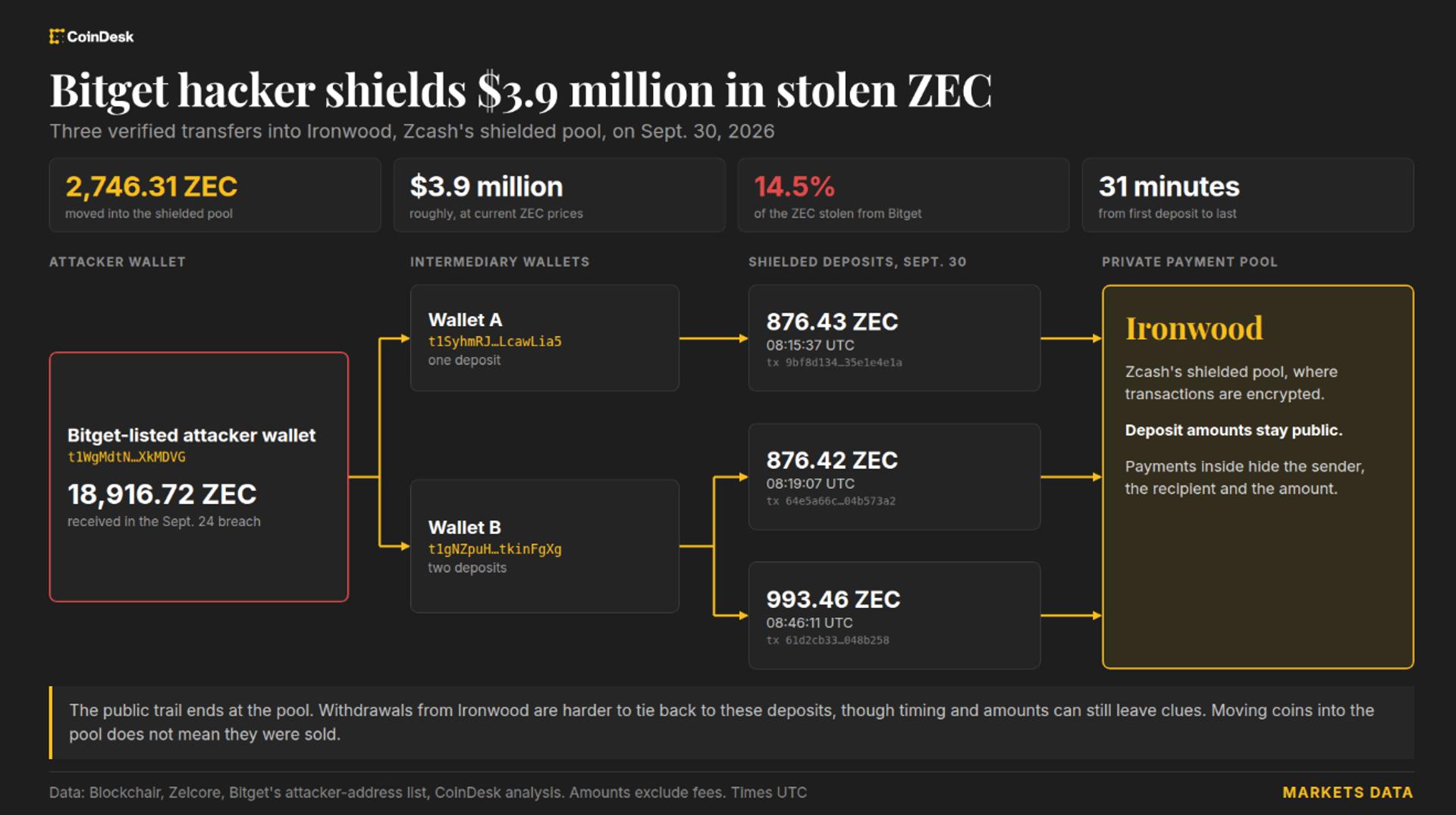
Hackers associated with the Bitget exchange breach have moved approximately $4 million worth of Zcash (ZEC) into a privacy-enhancing pool, significantly complicating efforts to trace the illicitly obtained funds. The transfers, totaling around 15% of the stolen ZEC, were directed into Ironwood, a privacy pool within the Zcash network. Ironwood is designed to obscure transaction details, including the sender, recipient, and the amount transferred, thereby enhancing the anonymity of the funds. This move represents a strategic effort by the perpetrators to launder the stolen cryptocurrency and make it more challenging for law enforcement and blockchain analytics firms to track its movement.
The Bitget exchange reported a security breach on November 22, 2023, which resulted in the theft of approximately $30 million in various cryptocurrencies, including Zcash. The exchange initially stated that user funds were not affected, as the stolen assets were from its hot wallet. Following the incident, Bitget announced it would cover all losses and enhance its security measures. The subsequent movement of ZEC into a privacy pool indicates that the hackers are actively attempting to obfuscate the origin and destination of the stolen assets. Zcash, known for its strong privacy features through its optional shielded transactions, provides a fertile ground for such laundering activities.
The use of privacy pools like Ironwood is a sophisticated tactic employed by cybercriminals to circumvent the transparency inherent in most blockchain technologies. While public blockchains like Bitcoin allow for transaction traceability, Zcash's shielded transactions, powered by zero-knowledge proofs (zk-SNARKs), allow users to hide transaction details. Ironwood, specifically, acts as a mixer or tumbler, pooling funds from multiple users and then redistributing them, making it extremely difficult to link specific inputs to specific outputs. This makes the stolen funds from the Bitget hack considerably harder to recover or track through traditional blockchain analysis methods.
This incident highlights the ongoing challenges in combating cryptocurrency theft and money laundering. As cryptocurrency adoption grows, so does the sophistication of cybercriminals. The ability to move large sums of stolen digital assets into privacy-preserving technologies poses a significant threat to the security and integrity of the cryptocurrency ecosystem. Law enforcement agencies and cybersecurity experts are continuously developing new techniques to monitor and trace illicit activities, but the advancements in privacy technologies present a persistent cat-and-mouse game. The Bitget hackers' move into Ironwood is a clear demonstration of their intent to leverage these privacy features to their advantage, making the recovery of the $4 million in Zcash a formidable task.
Original source — read the full reporting at the publisher:
Read on CoinDeskGet the weekly AI digest
AI news + new model releases, weekly. Drafted by our agents, reviewed by humans.