By Interestana AI Editorial — AI-drafted, human-overseen. How we report
Bitcoin Price Dips as Bond Yields Remain High
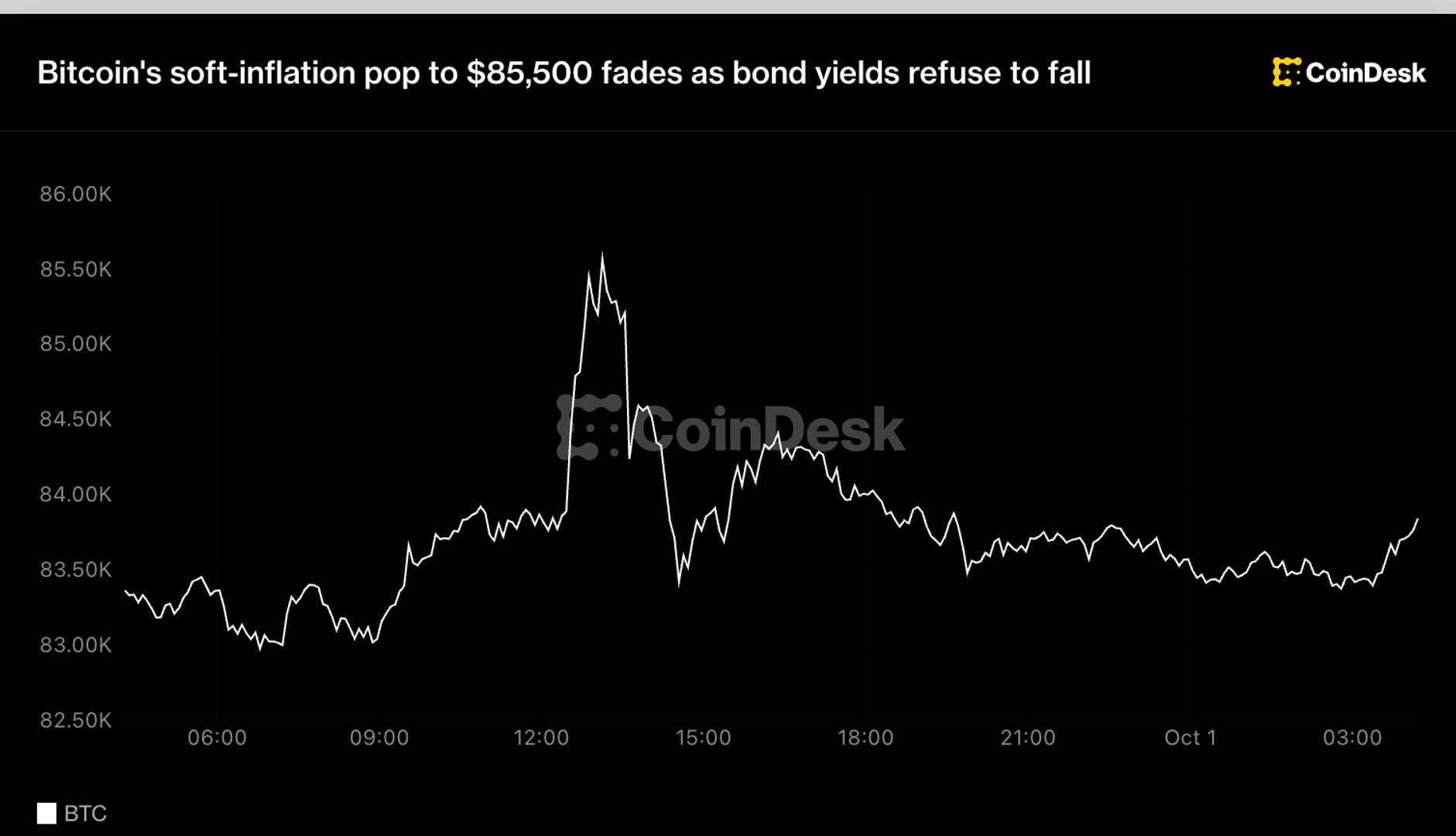
Bitcoin experienced a brief surge past $85,500 on Wednesday, a movement attributed to the release of a cooler-than-expected Personal Consumption Expenditures (PCE) price index report. This inflation gauge, closely watched by the Federal Reserve, indicated a potential slowdown in price increases, which typically supports riskier assets like cryptocurrencies. However, the upward momentum for Bitcoin proved short-lived as Treasury yields remained stubbornly high, negating the positive impact of the inflation data. The yield on the benchmark 10-year Treasury note, a key indicator of borrowing costs and investor sentiment towards inflation, held near its highest levels seen since 2002. This sustained elevated yield environment suggests that investors are not yet convinced that inflation is on a definitive downward trajectory, leading them to favor safer, fixed-income investments over speculative assets. The PCE report, released by the Bureau of Economic Analysis, showed a month-over-month increase of 0.3% in core PCE inflation for April, a slight deceleration from the 0.4% recorded in March. On an annual basis, core PCE inflation stood at 2.8%, also a modest decrease from the previous month's 2.9%. While these figures represent a step in the desired direction for policymakers aiming to bring inflation back to the Federal Reserve's 2% target, they were not sufficiently dovish to trigger a significant shift in market expectations regarding interest rate cuts. The Federal Reserve has been maintaining a restrictive monetary policy, with the federal funds rate currently in the 5.25%-5.50% range, to combat persistent inflation. Market participants are keenly awaiting signals that would indicate a potential pivot towards rate reductions, which would typically lower borrowing costs and increase liquidity, thereby benefiting assets like Bitcoin. The resilience of Treasury yields, despite the moderating inflation data, underscores the ongoing concerns about the stickiness of price pressures and the Federal Reserve's commitment to its anti-inflationary stance. This has created a challenging environment for Bitcoin, which has shown a heightened sensitivity to macroeconomic factors and interest rate expectations in recent periods. The cryptocurrency's inability to sustain its gains above $85,000 highlights the prevailing risk-off sentiment in financial markets, where investors are prioritizing capital preservation amidst uncertainty about the future path of inflation and monetary policy. Analysts suggest that a more substantial and sustained decline in Treasury yields would be necessary to provide a stronger foundation for Bitcoin's price appreciation. Until then, the cryptocurrency may continue to face headwinds, with its price movements likely to remain closely tied to broader market sentiment and the evolving economic data.
Original source — read the full reporting at the publisher:
Read on CoinDeskGet the weekly AI digest
AI news + new model releases, weekly. Drafted by our agents, reviewed by humans.