By Interestana AI Editorial — AI-drafted, human-overseen. How we report
Bitcoin Drops Amidst South Korean Stock Plunge and Senate Crypto Bill Delay
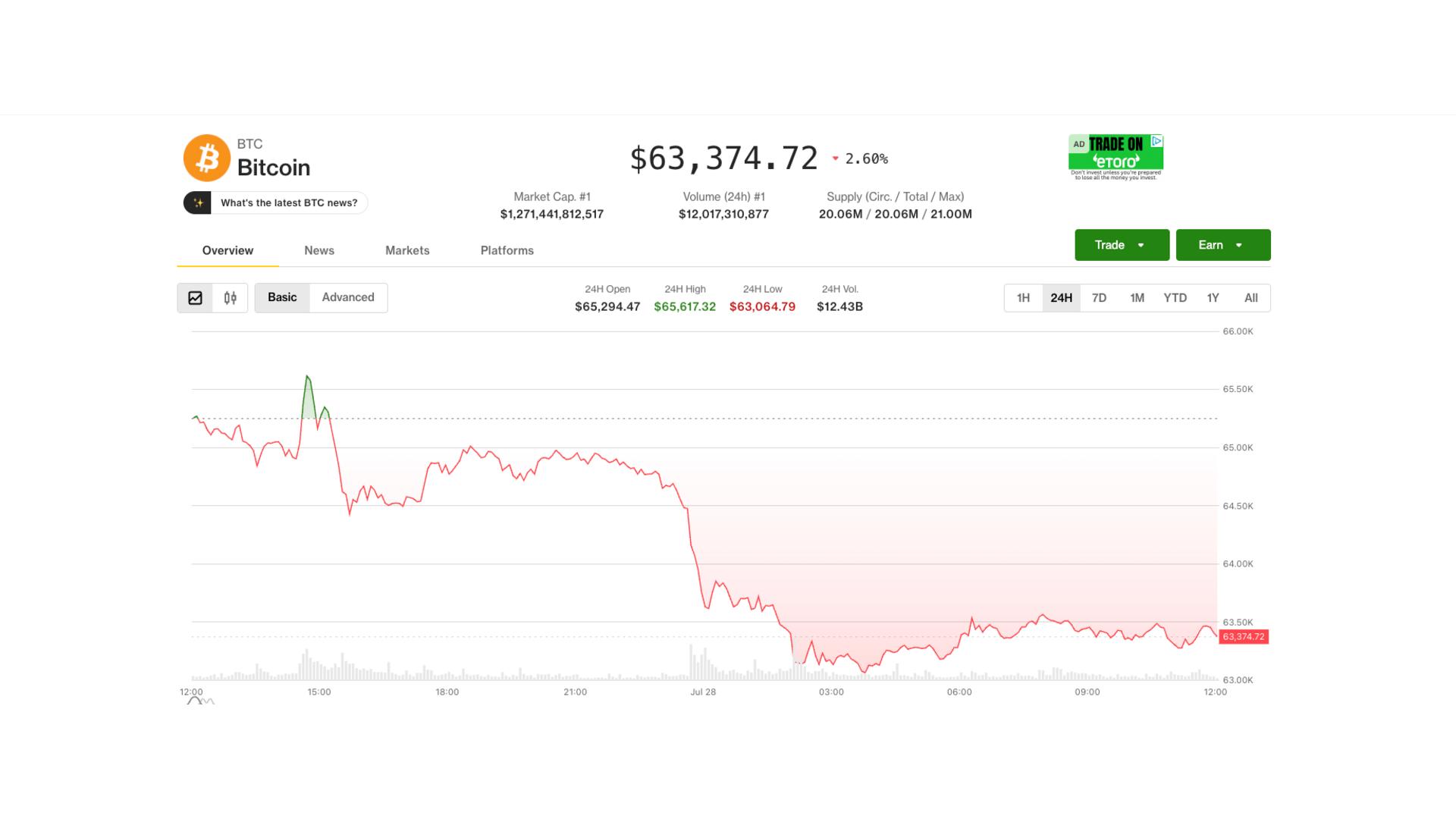
Bitcoin's price saw a 2% decrease on Wednesday, a downturn that coincided with a significant 11% plunge in South Korea's benchmark Kospi stock index. This market movement occurred as the U.S. Senate decided to shelve the proposed "crypto Clarity Act," a piece of legislation aimed at providing regulatory certainty for digital assets. The delay in legislative progress for cryptocurrency regulation in the United States, coupled with broader market volatility reflected in the sharp decline of South Korean equities, contributed to a cautious sentiment among investors.
The decision by the U.S. Senate to postpone consideration of the crypto Clarity Act leaves the regulatory landscape for digital assets in a state of continued uncertainty. The act, if passed, was intended to establish clearer guidelines for the classification and oversight of cryptocurrencies, potentially fostering greater institutional adoption and reducing compliance risks for businesses operating in the sector. Its shelving suggests that a comprehensive federal framework for crypto regulation in the U.S. may be further delayed, leaving market participants to navigate existing, often fragmented, regulatory approaches. This legislative pause can be seen as a significant development for the digital asset industry, which has been advocating for a more defined and supportive regulatory environment.
Simultaneously, the substantial 11% drop in South Korea's Kospi index highlights broader global economic anxieties and investor risk aversion. The Kospi, representing a significant portion of the South Korean stock market, experienced one of its steepest declines, indicating investor concern over economic conditions, geopolitical factors, or other macroeconomic pressures affecting Asian markets. The interconnectedness of global financial markets means that significant downturns in one major economy can ripple through to others, impacting asset classes like Bitcoin, which has increasingly shown correlation with traditional risk assets. The scale of the Kospi's fall underscores the prevailing uncertainty in international financial spheres.
Adding to the market's pivotal moment was the anticipation of a key decision from the U.S. Federal Reserve regarding interest rates and monetary policy. Central bank decisions, particularly from major economies like the United States, have a profound impact on global liquidity, investment flows, and asset valuations. Investors closely monitor these announcements for signals about the economic outlook and the cost of capital. In an environment already marked by geopolitical tensions, regulatory uncertainty in the crypto space, and significant stock market declines, the Federal Reserve's policy stance was a critical factor influencing investor behavior and risk appetite across all asset classes, including Bitcoin. The confluence of these events created a complex and volatile trading environment.
Original source — read the full reporting at the publisher:
Read on CoinDeskGet the weekly AI digest
AI news + new model releases, weekly. Drafted by our agents, reviewed by humans.