By Interestana AI Editorial — AI-drafted, human-overseen. How we report
EU Regulator Flags Insider Trading in Prediction Markets
The European Securities and Markets Authority (ESMA) has identified a significant problem with insider trading within prediction markets, as detailed in its biannual risk report released on Thursday. This finding directly contradicts the assertions made by promoters of these markets, who often present them as unbiased indicators of future events. The authority's report explicitly states that "A growing number of incidents illustrates that prediction markets are rife with insider trading." This suggests that individuals with non-public information about upcoming events are leveraging this knowledge to gain an unfair advantage, undermining the integrity of the market's price discovery mechanism.
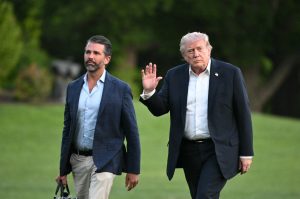
Prominent figures who have championed prediction markets include former President Trump and Donald Trump Jr. Additionally, Michael S. Selig, the Chairman of the Commodity Futures Trading Commission (CFTC), the U.S. agency responsible for regulating such markets, is also listed among their proponents. The ESMA's findings raise concerns about potential conflicts of interest, particularly when regulators themselves are associated with the promotion of the markets they oversee. Prediction market advocates typically argue that the prices of traded assets reflect the true probabilities of specific outcomes. For instance, they might claim that a market price accurately predicts the likelihood of a particular weather event, such as a hurricane making landfall in Hawaii before 2027, where no single trader can influence the outcome.
However, the ESMA's report questions this notion of objective truth-tracking when "Big Players" can both participate in prediction markets and actively influence the events being predicted. A concrete example cited involves the prediction market Polymarket, where users can trade an asset that pays out if the Federal Reserve's interest-rate policy remains unchanged in September. If members of the Federal Open Market Committee (FOMC), the body that determines U.S. interest-rate policy, were to trade on such an asset, the resulting market price could no longer be considered a genuine reflection of objective probability. The report implicitly draws a parallel to past incidents involving Federal Reserve officials. In 2021, reports surfaced, including one in Fortune, detailing "extensive stock trading in 2020" by two Fed officials during a period when the Fed was injecting trillions of dollars into financial markets to stabilize the economy and stimulate growth. This past behavior suggests a precedent for individuals with policy influence engaging in market activities that could be influenced by their decisions.
Original source — read the full reporting at the publisher:
Read on FortuneGet the weekly AI digest
AI news + new model releases, weekly. Drafted by our agents, reviewed by humans.