By Interestana AI Editorial — AI-drafted, human-overseen. How we report
ASEAN Navigates US-China AI Competition
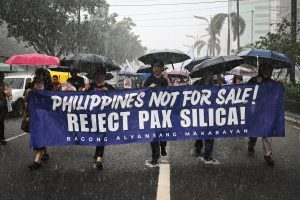
The global artificial intelligence landscape is increasingly defined by two competing geopolitical frameworks: the U.S.-led Pax Silica and the China-led World Artificial Intelligence Cooperation Organization (WAICO). These initiatives represent divergent visions for the organization of power, technology, and access to critical AI infrastructure. The U.S. launched Pax Silica in December 2025 with the stated aim of securing global supply chains for semiconductors, semiconductor manufacturing equipment, AI technologies, and rare earth minerals. Washington portrays Pax Silica as a cooperative venture rather than a tool for enforcing its own policies. In contrast, WAICO was initiated in Shanghai in July 2026 by 29 founding members, positioning itself as a proponent of emerging economies' interests and accessible AI, bolstered by the significant advancements in open-weight models from Chinese developers. Initially, the U.S. indicated that members of Pax Silica would not be prohibited from collaborating with China. Jacob Helberg, the architect of Pax Silica and Under Secretary of State, suggested in January at a Hudson Institute event that a strict "purity test" was not the intention, noting that "If you held everyone to that standard, you would quickly run out of friends." However, U.S. policy may be hardening. According to an internal draft obtained by Reuters, Washington is preparing to send a letter to Pax Silica partners that articulates the principle, "to be part of everything is to be part of nothing." While the State Department declined to comment on the letter to Reuters, its existence signals a perspective held by some U.S. officials: participation in the U.S.-led system precludes involvement in China's rival order. This evolving dynamic presents a complex challenge for the eleven-member Association of Southeast Asian Nations (ASEAN). ASEAN possesses several strategic advantages, including data center operating costs below the global average, established manufacturing infrastructure, and a rapid adoption rate of digital AI applications. These strengths position the bloc to potentially navigate between the two major AI powers. However, the effectiveness of ASEAN's engagement hinges on its ability to present a unified front and develop a cohesive strategy. The bloc's current fragmented approach risks diluting its influence and limiting its capacity to capitalize on the opportunities presented by the burgeoning AI sector. Without coordinated action, ASEAN members may find themselves unable to fully leverage their collective strengths or effectively negotiate their position in the increasingly bifurcated global AI ecosystem, potentially leading to a situation where they are neither fully aligned with the U.S. nor China, thereby diminishing their overall strategic leverage.
Original source — read the full reporting at the publisher:
Read on FortuneGet the weekly AI digest
AI news + new model releases, weekly. Drafted by our agents, reviewed by humans.