By Interestana AI Editorial — AI-drafted, human-overseen. How we report
Appeals Court Blocks Trump Ballroom Construction
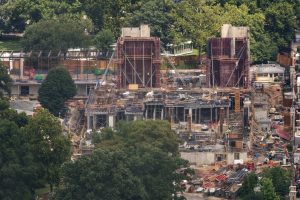
A divided federal appeals court ruled on Friday that the Trump administration must cease construction of a $400 million White House ballroom, stating that Congress, not the executive branch, holds the authority to approve such projects. The decision, issued by a three-judge panel from the U.S. Court of Appeals for the District of Columbia Circuit, determined that President Donald Trump lacks the unilateral power to build the 90,000-square-foot (8,400-square-meter) structure on the site of the former East Wing, which his administration ordered demolished last fall. President Trump publicly denounced the ruling as "unjust" and announced his intention to appeal the decision to the U.S. Supreme Court.
This ruling marks the second instance this week where the Trump administration's construction plans have faced significant challenges. Earlier, an assessment by the National Park Service identified potential issues with a proposed 250-foot-tall (76-meter-tall) triumphal arch. This arch, planned for a traffic circle between the Lincoln Memorial and Arlington National Cemetery, was found to potentially compromise the historical significance of numerous nearby sites.
The 2-1 decision regarding the ballroom sided with historic preservationists who filed a lawsuit to halt the construction. Work on the ballroom had already commenced, with visible progress above ground on the east side of the White House, as indicated by recent aerial photography. The court has imposed a two-week stay on its ruling to allow the administration time to file an appeal with the Supreme Court. The court's written opinion emphasized that the decision to construct a "massive ballroom" is a matter for Congressional deliberation and "not a matter for Executive self-help." The judges clarified that their ruling does not pass judgment on the desirability of the ballroom as a policy matter, nor does it definitively prevent its ultimate construction, but rather addresses the executive's authority in initiating such a project without legislative consent.
The project's estimated cost of $400 million highlights the substantial financial investment involved. The legal challenge brought by preservationists underscores concerns about the impact of large-scale construction projects on historical integrity and the proper channels for governmental authorization. The appeals court's emphasis on Congressional approval reflects a broader principle of checks and balances within the U.S. governmental system, particularly concerning the allocation of public funds and the alteration of significant federal properties.
Original source — read the full reporting at the publisher:
Read on FortuneGet the weekly AI digest
AI news + new model releases, weekly. Drafted by our agents, reviewed by humans.