By Interestana AI Editorial — AI-drafted, human-overseen. How we report
Ancient Gallo-Roman Wall Found Beneath Paris
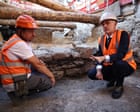
An approximately 20-meter (65ft) stretch of ancient wall, dating from the Gallo-Roman period, was discovered this summer beneath a building on the Île de la Cité in Paris. French archaeologists have hailed the find as a "major breakthrough," potentially confirming the location of the city's original settlement. The discovery was made near Notre Dame Cathedral, a historically significant area in the heart of the French capital. The Gallo-Roman period, which spanned from roughly the 1st century BCE to the 5th century CE, was a time when Roman culture and governance were established in Gaul, the region that would become France. Paris, then known as Lutetia, was a significant Gallo-Roman town. Archaeological evidence suggests that the area around the Île de la Cité has been inhabited for millennia, with earlier settlements predating the Roman era. However, definitive proof of the precise location of the very first settlement has remained elusive until now. The newly unearthed wall provides a tangible link to this early period of Parisian history. Its substantial length and apparent structural integrity suggest it was part of a significant building or defensive structure. The French Ministry of Culture has acknowledged the importance of the discovery, indicating that further investigations will be conducted to fully understand its context and implications for the historical understanding of Paris. The Île de la Cité itself is an island in the Seine River and is considered the historical and geographical center of Paris. It is home to several iconic landmarks, including Notre Dame Cathedral and the Sainte-Chapelle. The presence of a well-preserved Gallo-Roman structure in this location strongly supports theories that this was a focal point of early urban development. The excavation process involved careful removal of overlying layers of more recent construction and debris. Archaeologists employed advanced techniques to date the wall and analyze the surrounding soil for any associated artifacts. The findings are expected to be published in detail in academic journals following comprehensive analysis. This discovery is not only significant for Parisian history but also for the broader understanding of Roman urban planning and settlement patterns in Western Europe. The potential to pinpoint the exact origin of one of the world's most famous cities is a remarkable achievement for the archaeological community. Further research will likely focus on excavating the full extent of the wall and searching for related structures or artifacts that could shed more light on the lives of the earliest inhabitants of Paris.
Original source — read the full reporting at the publisher:
Read on The Guardian WorldGet the weekly AI digest
AI news + new model releases, weekly. Drafted by our agents, reviewed by humans.