By Interestana AI Editorial — AI-drafted, human-overseen. How we report
Satellite Measures Earth's Frame Dragging With 0.2% Precision
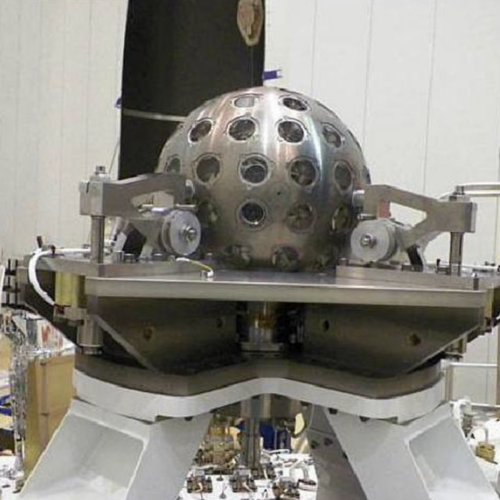
Astronomers have achieved the most precise measurement to date of the Lense-Thirring effect, also known as frame dragging, which is predicted by Albert Einstein's general theory of relativity. This phenomenon describes how a rotating mass, like the Earth, twists the fabric of spacetime around it. The team, led by physicist Ignazio Ciufolini at the Wuhan Institute of Physics and Mathematics in China, has reduced the uncertainty in measuring this effect on Earth to just 0.2 percent, a significant improvement from previous measurements that had uncertainties in the few percentage points.
Frame dragging is more pronounced around massive, rapidly rotating objects such as black holes, making its measurement around Earth considerably more challenging. Earth is millions of times less massive than a black hole and rotates at a relatively slow speed, complicating observational efforts. To overcome these challenges, the researchers utilized a specialized satellite designed for this experiment. This satellite, described as resembling a "cross between a golf ball and a disco globe," was instrumental in gathering the precise data required for this groundbreaking measurement.
The Lense-Thirring effect was theoretically modeled by physicists Josef Lense and Hans Thirring in 1918. While observed around celestial bodies with immense gravitational influence, confirming and precisely quantifying it for a planet like Earth has been a long-standing scientific endeavor. The success of Ciufolini's team represents a significant validation of Einstein's theory in a terrestrial context and pushes the boundaries of our understanding of gravity and spacetime.
Original source — read the full reporting at the publisher:
Read on Ars TechnicaGet the weekly AI digest
AI news + new model releases, weekly. Drafted by our agents, reviewed by humans.