By Interestana AI Editorial — AI-drafted, human-overseen. How we report
Airline Workers Resist US Agents in Migrant Crackdown
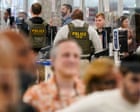
Airline workers are reportedly declining to assist US immigration agents in apprehending migrants at airports, creating friction with the Trump administration's accelerated enforcement efforts. This stance by airline personnel comes as Immigration and Customs Enforcement (ICE) and the Transportation Security Administration (TSA), both components of the Department of Homeland Security (DHS), have reportedly increased their collaboration to conduct as many as three dozen daily arrests at US airports in the past month. The objective of this intensified operation is to facilitate approximately 2,000 daily arrests of migrants nationwide. Many of the individuals targeted for arrest have pending applications for visas, asylum, or green cards, underscoring the complex legal statuses involved in these enforcement actions. The Wall Street Journal reported on this development, highlighting the growing tension between the airline industry and federal immigration authorities. The airline industry's resistance stems from concerns over operational disruptions and the ethical implications of facilitating the apprehension of passengers with legal claims to remain in the United States. Airlines are concerned that their employees could be drawn into direct confrontations with passengers, potentially impacting passenger experience and safety. Furthermore, the industry may be wary of alienating a significant portion of their customer base. The increased enforcement activity at airports is part of a broader strategy by the Trump administration to curb illegal immigration, with a stated goal of significantly increasing the number of daily deportations and arrests. This policy shift has placed federal agencies in a position of requesting cooperation from private entities, such as airlines, which are now finding themselves in a difficult position. The pushback from airline workers suggests a growing reluctance to be complicit in immigration enforcement actions that may conflict with their company's operational needs or perceived ethical responsibilities. The situation at airports represents a microcosm of the broader challenges and controversies surrounding immigration policy and enforcement in the United States, with private sector entities increasingly caught in the middle of federal directives and public sentiment. The Wall Street Journal's reporting indicates that this is not an isolated incident but rather a pattern of resistance emerging across the airline industry. The implications of this standoff could extend to how immigration enforcement is conducted in public spaces and the extent to which private companies are expected to cooperate with federal agencies. The Department of Homeland Security has not publicly commented on the specific instances of airline worker refusal, but the reported increase in joint operations suggests a concerted effort to leverage airport infrastructure for immigration control. The outcome of this friction remains to be seen, but it highlights the complex interplay between national security, immigration policy, and the operational realities of the private sector.
Original source — read the full reporting at the publisher:
Read on The Guardian WorldGet the weekly AI digest
AI news + new model releases, weekly. Drafted by our agents, reviewed by humans.