By Interestana AI Editorial — AI-drafted, human-overseen. How we report
AI-Powered Touchscreens Used in Monkey Study
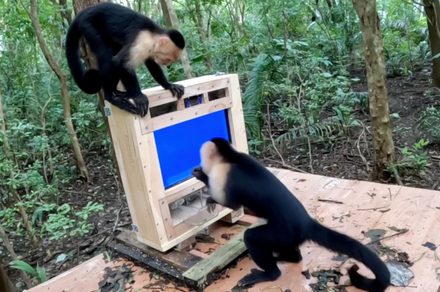
Artificial intelligence is extending its reach into unexpected domains, with a novel scientific study employing AI-powered touchscreens for wild capuchin monkeys. This research, conducted in a rainforest environment, aims to explore the cognitive capabilities and learning processes of these primates by presenting them with interactive tasks. The monkeys are incentivized to engage with the touchscreens by earning banana rewards, a common and effective positive reinforcement method in animal behavior studies.
The study utilizes a custom-built AI system that adapts the complexity of the touchscreen tasks based on the monkeys' performance. This adaptive learning mechanism allows researchers to present challenges that are neither too simple to be unengaging nor too difficult to cause frustration, thereby optimizing the learning experience. The AI analyzes the monkeys' interactions with the touchscreen, such as the speed of response, accuracy of selection, and patterns of interaction, to gauge their understanding and problem-solving skills. This data collection is crucial for understanding the nuances of primate cognition.
Researchers involved in the project are observing how the capuchin monkeys, known for their intelligence and dexterity, approach the novel technology. The study seeks to understand if these primates can develop abstract reasoning and learn complex sequences through visual and tactile interaction. By observing their behavior and learning curves, scientists hope to gain insights into the evolutionary underpinnings of intelligence and the potential for non-human primates to interact with and learn from sophisticated technological interfaces. The use of AI in this context moves beyond simple stimulus-response experiments, allowing for more dynamic and personalized cognitive assessments.
This initiative represents a unique intersection of artificial intelligence, animal behavior research, and ecological studies. While AI has become pervasive in human applications, its deployment in a naturalistic setting with wild animals for cognitive research is groundbreaking. The findings from this study could contribute to a broader understanding of animal intelligence, the development of AI systems that can interact with diverse species, and potentially inform conservation efforts by better understanding the cognitive needs and adaptability of primate populations. The long-term implications may involve developing more sophisticated tools for animal welfare monitoring and research across various species.
Original source — read the full reporting at the publisher:
Read on Digital TrendsGet the weekly AI digest
AI news + new model releases, weekly. Drafted by our agents, reviewed by humans.