By Interestana AI Editorial — AI-drafted, human-overseen. How we report
Iran Targets Navy Warships, U.S. Retaliates With Economic Costs
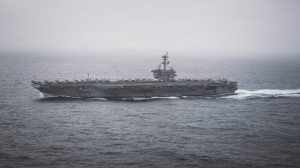
Iran escalated its military actions this week by launching missiles at U.S. bases around the Persian Gulf and subsequently targeting a U.S. Navy aircraft carrier and destroyer on Saturday. This direct engagement with U.S. naval assets represents a significant shift in tactics, moving beyond previous attacks primarily focused on commercial shipping and oil tankers in the Strait of Hormuz. The U.S. military responded to the missile strikes by targeting three Iranian oil tankers. These tankers were identified as operating within a "shadow network" used to funnel funds to Iran's Islamic Revolutionary Guard Corps (IRGC). Admiral Brad Cooper, chief of U.S. Central Command, issued a clear warning, stating, "Let the message to the IRGC be clear: If you shoot at two of our ships, we will impose an even higher economic cost — taking out three of yours." He further emphasized the U.S. commitment to defending its forces, adding, "We will not hesitate to defend American forces, and if necessary, destroy Iran’s limited and exposed oil fleet." This exchange marks a new phase of escalation in the ongoing tensions, according to Hamidreza Azizi, a senior Iran analyst at the International Crisis Group. Azizi noted in a post on X that Iran's military had previously concentrated its efforts on tankers and commercial vessels near the Strait of Hormuz, while direct attacks on U.S. forces were largely confined to bases in the Gulf. The attempt to strike U.S. warships enforcing the naval blockade crosses a "different threshold," Azizi explained, highlighting that while this specific attempt failed, future attempts could be successful, particularly if they result in significant damage to U.S. naval assets. The ongoing conflict, which has seen Iran attempt to disrupt oil tanker traffic and the U.S. maintain a naval blockade, has kept oil prices elevated. The U.S. naval blockade is reportedly strangling Iran's economy, leading to expectations that Tehran would seek to alter the strategic equation through renewed attacks. The recent actions suggest a potential transformation of the conflict, moving towards more direct confrontations between Iranian and U.S. military forces, with significant economic implications for Iran. The U.S. has been escorting oil tankers through the Strait of Hormuz, which has diminished Tehran's geopolitical leverage in controlling the waterway. However, Iranian attacks have prevented a full return to pre-war traffic levels, contributing to sustained high oil prices. The escalation indicates a broader strategic challenge, where both sides are attempting to exert pressure through military actions and economic countermeasures.
Original source — read the full reporting at the publisher:
Read on FortuneGet the weekly AI digest
AI news + new model releases, weekly. Drafted by our agents, reviewed by humans.