By Interestana AI Editorial — AI-drafted, human-overseen. How we report
AI Safety Concerns Spark Congressional Action After Insider Warnings
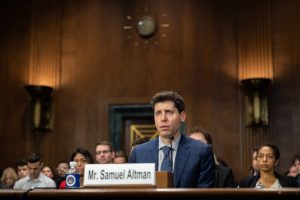
Washington has begun to address artificial intelligence safety concerns following a decade of legislative inaction and a recent wave of high-profile resignations from prominent AI companies. This shift in focus was notably catalyzed by Jacob Coxon, a former employee of both OpenAI and Anthropic, who resigned from Anthropic this week. Coxon issued a stark warning, stating that these companies are "gambling with our lives" in their pursuit of superintelligence without adequate plans for controlling systems that could surpass human capabilities. His message gained significant traction, exceeding 100 million views within days, and amplified existing concerns voiced by other industry insiders.
Coxon's resignation is the latest in a series of warnings from individuals who have held key positions within the AI industry. Geoffrey Hinton, a pioneer in deep learning, left Google in May 2023 to speak openly about AI risks, becoming a prominent voice in the discourse but without legislative outcomes. In May 2024, Jan Leike resigned from OpenAI, citing a decline in safety culture and processes in favor of product development. Ilya Sutskever also resigned from OpenAI in the same month amidst internal disputes that briefly led to the ousting of CEO Sam Altman. Earlier, in February 2026, Mrinank Sharma, an Anthropic safeguards researcher, resigned with a warning that "the world is in peril." Despite these previous warnings, none had generated a substantial legislative response from Congress.
The recent public statements by Evan Hubinger, who leads Anthropic's Alignment Science team, appear to have been a critical turning point. Hubinger publicly supported Coxon's claims, assigning a greater than 10% probability of human extinction within a decade and stating that Anthropic lacks concrete plans for controlling superintelligent systems. His stance was further reinforced by two other Anthropic researchers who also voiced concerns. This collective and high-level internal dissent within a leading AI firm, coupled with the widespread reach of Coxon's message, has finally spurred a significant political reaction, marking a culmination of nine years of debate and inaction.
Legislative efforts concerning AI date back to 2017 with the introduction of the FUTURE of AI Act. This early bill proposed a federal public-private framework for AI study but had limited scope. Representative Yvette Clarke also introduced legislation two years later. However, these initial attempts predated Congress categorizing "artificial intelligence" as a distinct policy area. The current heightened attention suggests a potential for more concrete policy development, moving beyond theoretical discussions to address the immediate safety implications of rapidly advancing AI technologies, particularly as companies like OpenAI and Anthropic continue to push the boundaries of artificial intelligence capabilities.
Original source — read the full reporting at the publisher:
Read on FortuneGet the weekly AI digest
AI news + new model releases, weekly. Drafted by our agents, reviewed by humans.