By Interestana AI Editorial — AI-drafted, human-overseen. How we report
Webb Telescope Captures New Images of Exoplanet Atmosphere
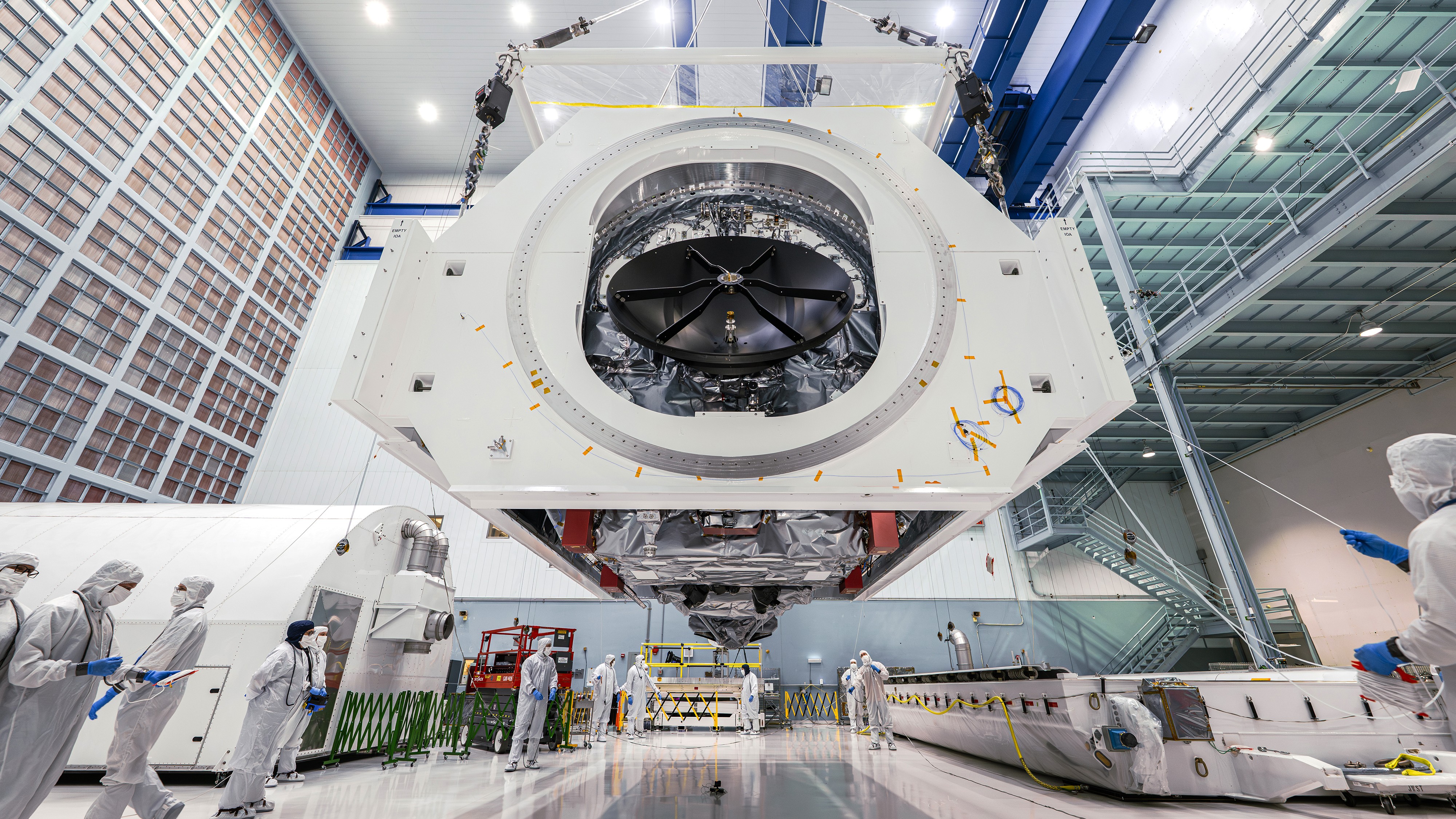
The James Webb Space Telescope (JWST) has captured unprecedented data on the atmosphere of exoplanet WASP-96b, revealing the presence of water vapor and clouds. These observations, released on July 12, 2022, represent a significant advancement in the study of exoplanet atmospheres and the search for extraterrestrial life. WASP-96b is a hot gas giant located approximately 1,150 light-years away in the constellation Phoenix. It orbits its star every 3.4 days and has a mass roughly half that of Jupiter. The exoplanet has no known native life, but its atmospheric composition provides crucial insights into planetary formation and evolution.
JWST's Near-Infrared Imager and Slitless Spectrograph (NIRISS) instrument was used to observe WASP-96b as it transited, or passed in front of, its host star. During a transit, some of the starlight filters through the planet's atmosphere. By analyzing the specific wavelengths of light that are absorbed or transmitted, scientists can determine the chemical makeup of the atmosphere. The data from JWST shows clear evidence of water vapor, as well as distinct signatures of clouds and haze. Previous observations from other telescopes had hinted at these components, but JWST's superior sensitivity and resolution have provided definitive proof and detailed spectral information.
This achievement marks a pivotal moment for exoplanet science, demonstrating JWST's capability to probe the atmospheres of distant worlds with remarkable detail. The telescope's ability to detect specific molecules like water is a critical step in identifying potentially habitable exoplanets. While WASP-96b itself is not considered a candidate for life due to its extreme temperature and gas giant nature, the techniques employed are directly applicable to the study of smaller, rocky exoplanets within the habitable zones of their stars. Scientists anticipate that JWST will continue to revolutionize our understanding of exoplanets, potentially leading to the discovery of biosignatures – indicators of life – in the atmospheres of other worlds.
The James Webb Space Telescope is a collaboration between NASA, the European Space Agency (ESA), and the Canadian Space Agency (CSA). It is the most powerful space telescope ever built, designed to observe the universe in infrared light. Its advanced instruments allow it to peer through cosmic dust and gas to see the first stars and galaxies forming, study the evolution of galaxies, and characterize exoplanets. The successful deployment and operation of JWST, following its launch on December 25, 2021, have already yielded groundbreaking scientific results, with the WASP-96b atmospheric data being one of its earliest and most significant contributions to exoplanetary research.
Original source — read the full reporting at the publisher:
Read on The AtlanticGet the weekly AI digest
AI news + new model releases, weekly. Drafted by our agents, reviewed by humans.