Perseverance Rover Finds Surface Carbon on Mars
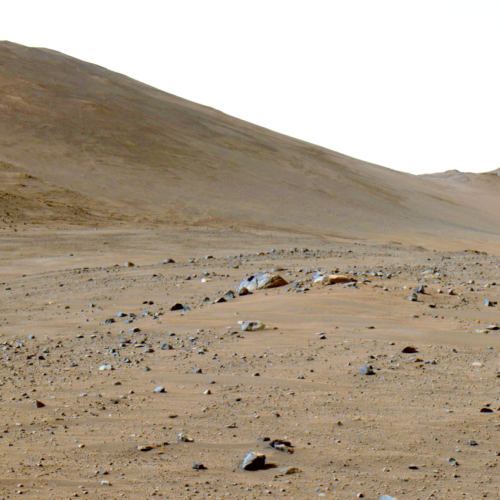
NASA's Perseverance rover detected complex macromolecular carbon situated directly on the surface of a Martian rock outcrop at a site named Bright Angel within Jezero Crater. This discovery, announced this week, marks the shallowest detection of organic matter on the Martian surface to date, according to Ashley E. Murphy, a researcher at the Planetary Institute in Tucson, Arizona, and lead author of the study. Previous findings of organic carbon by the rover typically required drilling or abrading rocks to expose the material.
The carbon was identified at an outcrop along the edge of an ancient river channel, Neretva Vallis. The presence of such a significant amount of macromolecular carbon on the surface is noteworthy because, on Earth, it commonly indicates a biological origin. However, scientists caution that this does not definitively confirm past life on Mars. To ascertain the precise nature and origin of this carbon, researchers may need to analyze samples brought back to Earth.
The detection was made using the SHERLOC instrument, a UV Raman spectrometer mounted on Perseverance's robotic arm. SHERLOC operates by firing a deep-ultraviolet laser at a target and analyzing the returned light, which provides information about specific molecular bonds. This advanced capability allows for the identification of chemical compounds on the Martian surface.
Original source — read the full reporting at the publisher:
Read on Ars Technica