By Interestana AI Editorial — AI-drafted, human-overseen. How we report
Jupiter-Size Planet Survives Star's Death
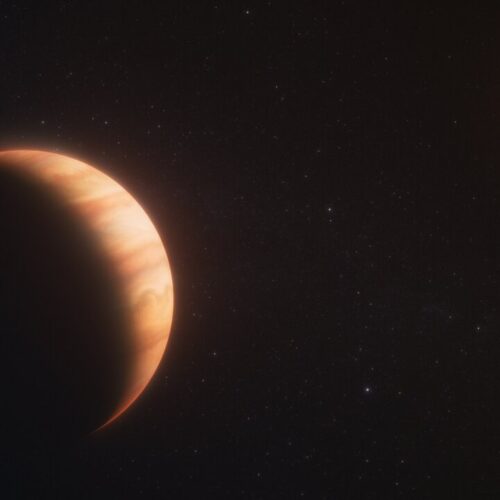
Astronomers have used the James Webb Space Telescope (JWST) to conduct the first detailed observations of WD 1856 b, a Jupiter-sized planet that has uniquely survived the death of its Sun-like star. This planet orbits a white dwarf, the dense remnant of a star that has exhausted its nuclear fuel. The discovery of WD 1856 b was initially made in 2020 by the Transiting Exoplanet Survey Satellite (TESS), which observed a sample of approximately 2,000 white dwarfs.
During the TESS observation, astronomers were searching for smaller celestial bodies like comets or asteroids transiting in front of the white dwarfs. Instead, they detected a gas giant in the WD 1856 system, a finding that surprised the research team. Christopher O'Connor, a theoretical astrophysicist at Cornell University and co-author of a recent study published in Nature, described the discovery as "weird" upon initial inspection.
The WD 1856 system presents a unique astronomical scenario. White dwarfs are the Earth-sized, carbon and oxygen-rich cores left behind after a Sun-like star undergoes its red-giant phase and sheds its outer layers. The survival of a gas giant like WD 1856 b in such close proximity to its former star's remnant challenges existing models of stellar evolution and planetary system dynamics. The JWST observations are expected to provide further insights into how this planet maintained its orbit and composition through the star's violent end-of-life stages.
Original source — read the full reporting at the publisher:
Read on Ars TechnicaGet the weekly AI digest
AI news + new model releases, weekly. Drafted by our agents, reviewed by humans.