By Interestana AI Editorial — AI-drafted, human-overseen. How we report
The Straight Story: A Writer's Choice for Feelgood Film
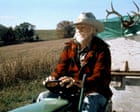
Writer and critic Luke Turner has selected David Lynch's 1999 film, 'The Straight Story,' as his personal feelgood movie, diverging from the director's typically darker and more surreal works. Turner's introduction to Lynch's cinematic universe was not through the unsettling narratives of 'Mulholland Drive,' the unsettling small-town mysteries of 'Twin Peaks,' the deceptive suburban facade of 'Blue Velvet,' or the violent road trip of 'Wild at Heart.' Instead, at the age of 15, Turner encountered 'The Straight Story,' a film that presented a stark contrast to Lynch's established reputation for exploring sexual depravity and grisly malevolence.
Released in May 1999, 'The Straight Story' is based on the true story of Alvin Straight, a 73-year-old World War II veteran. The film chronicles Straight's arduous journey across the American Midwest, covering a distance of 300 miles, on a lawnmower. His sole motivation for this extraordinary trip was to reconcile with his estranged and ailing brother. The title itself, as Turner notes, suggests a departure from Lynch's usual thematic territory, inviting audiences to consider the director's attempt at a more straightforward narrative. Turner describes the film as akin to 'Lynch does Disney,' characterizing it as a family-friendly ode to Americana that, while sparse and subtly peculiar, discovers a delicate poetic quality within the mundane aspects of daily existence.
This choice positions 'The Straight Story' as an outlier in David Lynch's filmography, a director widely recognized for his contributions to surrealism and the avant-garde in cinema. Films like 'Eraserhead' (1977), 'Blue Velvet' (1986), and 'Mulholland Drive' (2001) have cemented his status as a filmmaker who delves into the subconscious, the uncanny, and the darker undercurrents of human experience. 'The Straight Story,' however, eschews these elements in favor of a more grounded and emotionally resonant narrative. The film's critical reception at the time of its release acknowledged this tonal shift, with many critics noting Lynch's ability to find profound humanism within a seemingly simple premise. The narrative focuses on themes of family, forgiveness, and the quiet dignity of ordinary people undertaking extraordinary journeys.
Turner's personal connection to 'The Straight Story' underscores its impact as a comfort film, offering a sense of warmth and gentle reflection that stands apart from the more challenging or disturbing aspects of Lynch's other works. The film's deliberate pacing and focus on the visual poetry of the American landscape contribute to its meditative quality. The journey itself, undertaken on a slow-moving lawnmower, becomes a metaphor for the passage of time and the unhurried pursuit of reconciliation. This emphasis on the everyday, the quiet moments, and the inherent beauty found in simple acts of human connection is what Turner identifies as the film's core appeal, making it a unique and cherished entry in his personal cinematic landscape.
Original source — read the full reporting at the publisher:
Read on The Guardian CultureGet the weekly AI digest
AI news + new model releases, weekly. Drafted by our agents, reviewed by humans.