By Interestana AI Editorial — AI-drafted, human-overseen. How we report
Dolphin nicknamed 'Bubbles' exhibits kleptoparasitic behavior, forcing prey to vomit before consumption
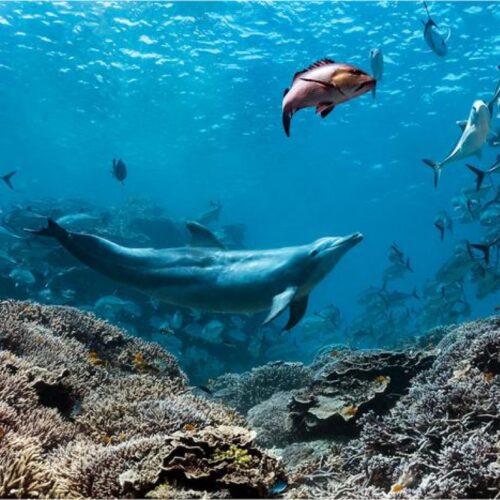
Staff at the Lady Elliott Island Eco Resort, situated off the southern Great Barrier Reef in Australia, have become familiar with the peculiar feeding habits of a male bottlenose dolphin they've affectionately nicknamed Bubbles. This particular dolphin has been a regular visitor to the area since at least 2017. Bubbles has been observed engaging in a consistent pattern of harassment directed at local bigeye trevally. The dolphin actively chases these fish, inducing significant stress. This stress, in turn, causes the trevally to regurgitate the food they have recently consumed. Following this forced regurgitation, Bubbles then proceeds to consume the expelled meal. This unusual and specific predatory strategy is now the central focus of a new scientific paper that has been published in the esteemed journal *Ecology and Evolution*. The research aims to shed light on this specific instance of foraging behavior within the marine environment.
Co-author Asia Haines, affiliated with the University of the Sunshine Coast, has commented on the widespread perception of dolphins as inherently benevolent creatures, often referred to as the 'good guys of the sea.' Haines suggests that this popular view is largely a result of anthropomorphism – the human tendency to attribute human characteristics, emotions, and intentions to non-human animals. She posits that the seemingly perpetual 'smile' on a dolphin's face might contribute to this perception. However, Haines emphasizes that dolphins are, in reality, sophisticated predators. They actively hunt and consume their prey, and this hunting behavior is not diminished or altered by whether the prey's food has been acquired from another species or not.
The technical term for the behavior exhibited by Bubbles is kleptoparasitism. This is a form of foraging where one species obtains food by taking it from another, often through aggressive confrontation or by exploiting the efforts of another animal. While Bubbles' actions are a notable example, kleptoparasitism is a widespread phenomenon observed across a vast array of animal species and ecosystems. Examples include various insects, such as cuckoo wasps, which lay their eggs in the nests of other wasp species, effectively stealing resources. In the mammalian kingdom, opportunistic food theft is common among species like bears, coyotes, and wolves. The avian world also presents numerous instances, with raptors, gulls, terns, and bald eagles frequently documented attacking other birds to seize their catches. Specialized seabirds like skuas and frigatebirds are known for stealing food from other seabirds, and smaller birds like masked shrikes have been observed taking prey from wheatears. Even common species like Eurasian blackbirds have been seen stealing smashed snails from thrushes. Hyenas and jackals are also well-known for their consistent food-stealing habits within their social structures. The study involving Bubbles contributes to a broader scientific understanding of the diverse and sometimes surprising predatory tactics employed by marine mammals, challenging idealized notions and highlighting their complex ecological roles.
Original source — read the full reporting at the publisher:
Read on Ars TechnicaGet the weekly AI digest
AI news + new model releases, weekly. Drafted by our agents, reviewed by humans.