By Interestana AI Editorial — AI-drafted, human-overseen. How we report
Florida Executes 77-Year-Old Man, 16th This Year
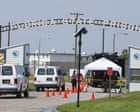
Curtis Wilkie Beasley, a 77-year-old Florida man, was executed by lethal injection on Tuesday, September 29, 2026, for his conviction in the 1995 killing of Carolyn Monfort. This execution marks the 16th person to be put to death in Florida this year, solidifying its position as the nation's busiest death chamber. Beasley was pronounced dead at 6:12 PM at the Florida state prison near Starke. His conviction stemmed from a first-degree murder charge, alongside robbery and grand theft auto, related to a hammer attack on Monfort at her home south of Orlando. The U.S. Supreme Court had declined to intervene in his case, allowing the execution to proceed. Beasley's case involved the murder of Carolyn Monfort, who was attacked in her home. The crime for which Beasley was convicted occurred in 1995. The legal proceedings leading to his execution spanned over three decades, involving appeals and reviews of his conviction and sentence. Florida's use of capital punishment has been a subject of ongoing debate, with the state consistently ranking high in the number of executions carried out annually. The method of execution employed was lethal injection, a standard procedure in many U.S. states that practice capital punishment. The specific details of the attack involved a hammer, as stated in the conviction. Beasley was found guilty of first-degree murder, robbery, and grand theft auto. The location of the crime was Monfort's home, situated south of Orlando. The state prison facility near Starke served as the site for the execution. The Supreme Court's decision not to hear his final appeal was a critical juncture in the process, paving the way for the scheduled execution. The number of executions in Florida this year, reaching 16, underscores the state's active death penalty system. This figure places Florida at the forefront of states carrying out capital punishment. The case of Curtis Wilkie Beasley represents one of many that have concluded with an execution in the state. The legal framework surrounding capital punishment in Florida, as in other states, involves a complex series of appeals and judicial reviews designed to ensure due process. However, the finality of the execution signifies the exhaustion of these legal avenues for the condemned individual. The conviction for robbery and grand theft auto indicates that the murder was part of a larger criminal act. The age of the executed individual, 77, is notable in the context of death penalty statistics, as older individuals are less frequently executed. The date of the execution, Tuesday, September 29, 2026, places this event within the current year's tally of capital punishments in Florida. The victim, Carolyn Monfort, was the subject of the 1995 crime. The legal process involved the conviction for first-degree murder, which is the most serious category of homicide. The state prison near Starke is a facility equipped to carry out executions. The Supreme Court's role in capital cases is often to review constitutional challenges or significant legal questions, and its decision to decline intervention suggests that such grounds were not met in Beasley's final appeal. The total number of executions in Florida for the year, 16, is a significant statistic that reflects the state's approach to criminal justice and punishment.
Original source — read the full reporting at the publisher:
Read on The Guardian WorldGet the weekly AI digest
AI news + new model releases, weekly. Drafted by our agents, reviewed by humans.