By Interestana AI Editorial — AI-drafted, human-overseen. How we report
Record 33 Million Tons of Toxic Sargassum Seaweed Clogs Caribbean Beaches
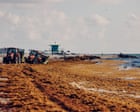
An unprecedented and alarming accumulation of sargassum seaweed, estimated at a staggering 33 million tons, is currently overwhelming coastlines across the Caribbean Sea and the Gulf of Mexico. This phenomenon, while not entirely new to the region, has reached a record-breaking scale, presenting severe environmental, economic, and potential health challenges. Sargassum, a genus of large brown seaweed, typically floats in the open ocean, forming vast mats that serve as habitats for various marine species. However, under certain conditions, these mats can break apart and drift ashore in massive quantities.
The decomposition of such immense volumes of sargassum on beaches triggers a cascade of negative ecological impacts. As the seaweed breaks down, it consumes dissolved oxygen in the water, leading to hypoxic or anoxic conditions. These low-oxygen environments are detrimental, and often fatal, to marine life, including fish, shellfish, and other organisms that rely on adequate oxygen levels for survival. This "dead zone" effect can devastate local fisheries and disrupt the delicate balance of marine ecosystems. Furthermore, the decomposition process releases hydrogen sulfide and other volatile organic compounds, resulting in foul-smelling gases that significantly degrade air quality and the aesthetic appeal of coastal areas, impacting tourism and local quality of life.
Marine scientists and researchers have issued urgent warnings about the broader ecological consequences of this sargassum influx. The dense mats of algae that form along the shore can act as a physical barrier, effectively blocking essential sunlight from reaching vital underwater plant life, such as seagrasses and coral reefs. These submerged ecosystems are critical nurseries and habitats for a vast array of marine species, and their suffocation due to a lack of light can have long-lasting repercussions on biodiversity and the health of the entire marine environment. The disruption to these foundational habitats can lead to declines in fish populations and impact the resilience of coral reefs to other stressors like climate change.
Beyond the ecological damage, the decomposing sargassum also poses potential human health risks. Scientific studies have indicated that sargassum can absorb and accumulate heavy metals from the ocean, including arsenic. As the seaweed decomposes on beaches, it can leach these toxic substances into the sand, raising concerns for beachgoers, particularly children who may play in or ingest contaminated sand. While the direct health impacts of this arsenic leaching are still under active investigation, the presence of such high concentrations of decomposing organic matter alongside potential toxins necessitates careful monitoring and public health advisories. The sheer logistical and economic burden of removing millions of tons of this seaweed from affected beaches is immense, requiring substantial financial investment, labor, and innovative solutions to mitigate its pervasive impact on the region.
Original source — read the full reporting at the publisher:
Read on The Guardian EnvironmentGet the weekly AI digest
AI news + new model releases, weekly. Drafted by our agents, reviewed by humans.