By Interestana AI Editorial — AI-drafted, human-overseen. How we report
Seattle Company Simulates 15,000 Years of Solar Wind
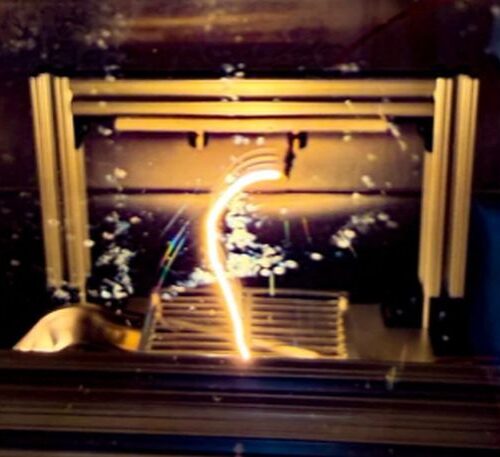
A Seattle-based company has developed a method to simulate approximately 15,000 years of solar wind bombardment on lunar regolith in a condensed four-hour period. This process is integral to understanding the accumulation of helium-3, an isotope of helium produced by the Sun during its nuclear fusion processes. A portion of this helium-3 is released from the Sun as part of the solar wind, a continuous stream of charged particles that travels throughout the Solar System. Over vast timescales, this solar wind has impacted all celestial bodies within the Sun's gravitational influence, including Earth's Moon. The Moon, lacking a protective magnetic field or atmosphere, is particularly susceptible to this constant bombardment. Consequently, helium-3 has been accumulating in the lunar soil, or regolith, for billions of years. These helium ions typically penetrate only a shallow depth into the individual grains of the lunar soil. However, periodic meteorite impacts on the Moon's surface have historically churned the regolith, mixing some of this accumulated helium-3 to depths slightly below the surface. The ability to accelerate this simulation process from millennia to hours offers significant advantages for scientific research and potential resource utilization. Researchers can now more efficiently study the distribution and concentration of helium-3 on the lunar surface, which is considered a potential fuel source for future fusion reactors. Understanding the long-term effects of solar wind exposure is also critical for designing durable equipment and habitats for lunar missions. The company's innovation allows for rapid testing and validation of models related to lunar resource prospecting and the environmental conditions on the Moon. This accelerated simulation is a key step in assessing the feasibility of extracting and utilizing lunar resources, particularly helium-3, which could play a role in future clean energy initiatives. The detailed analysis of regolith samples subjected to this simulated prolonged solar wind exposure provides granular data on ion implantation and mixing processes, crucial for refining our understanding of lunar geology and space weathering. The implications extend to astrobiology and the search for signs of past or present life beyond Earth, as solar wind interactions can influence the chemical composition of planetary surfaces. This technological advancement by the Seattle company marks a significant stride in space science research and the practical exploration of extraterrestrial resources, enabling more informed decision-making for future space endeavors.
Original source — read the full reporting at the publisher:
Read on Ars TechnicaGet the weekly AI digest
AI news + new model releases, weekly. Drafted by our agents, reviewed by humans.