By Interestana AI Editorial — AI-drafted, human-overseen. How we report
Skeleton of the world’s rarest marine mammal preserved by digital imaging
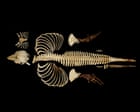
Scientists created a digital reconstruction of the vaquita, the world's most endangered marine mammal, on June 20, 2026, to support research and conservation. This project involved digitizing the skeleton of a female vaquita, a small porpoise native to Mexico's northern Gulf of California. The process utilized a combination of medical imaging, ultra-high-resolution micro CT scans, and photography to capture the animal's anatomy in three dimensions. This digital preservation aims to provide valuable data for scientists studying the species, whose wild population is estimated to be fewer than ten individuals. The initiative is crucial for understanding the vaquita's biology and developing effective strategies to prevent its extinction. The vaquita faces severe threats primarily from illegal gillnet fishing, which inadvertently captures and drowns the porpoises. The digital skeleton will serve as a permanent, detailed record, accessible for future scientific inquiry and educational purposes, even as the species' wild numbers dwindle. This technological approach offers a novel way to study critically endangered animals without further disturbing their fragile populations or requiring physical specimens that are increasingly scarce.
Original source — read the full reporting at the publisher:
Read on The Guardian EnvironmentGet the weekly AI digest
AI news + new model releases, weekly. Drafted by our agents, reviewed by humans.