By Interestana AI Editorial — AI-drafted, human-overseen. How we report
Korean Leveraged ETF Misfires, Jumps 50% Even as SK Hynix Slumps
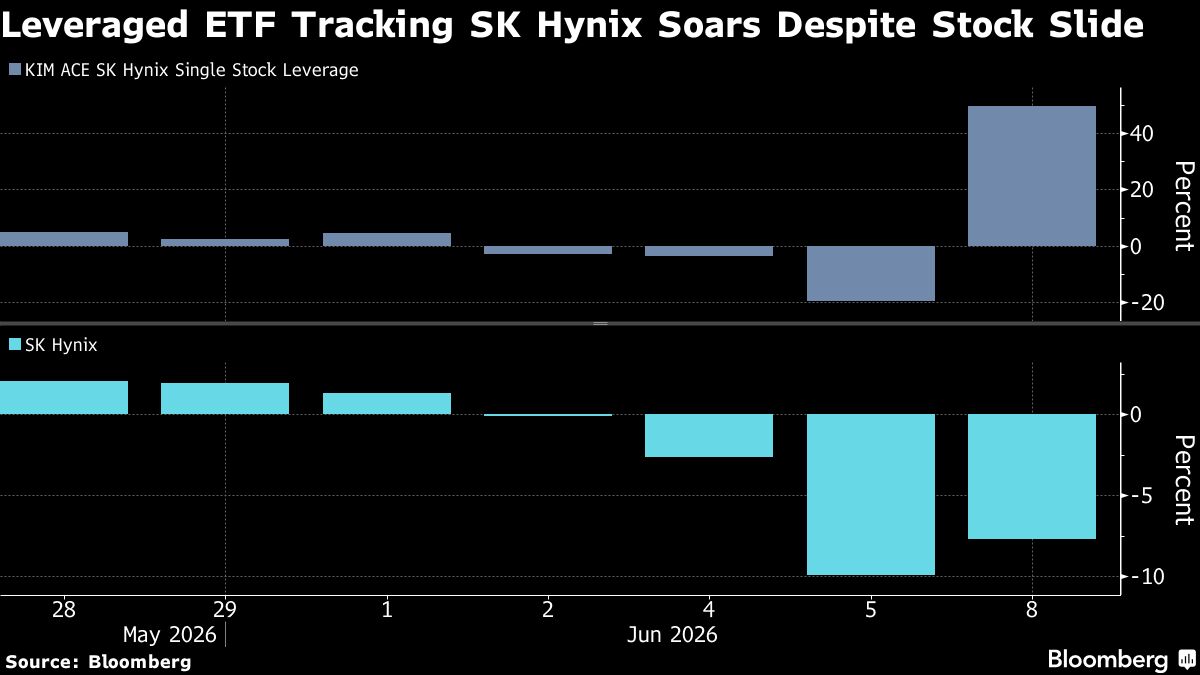
On Monday, a leveraged exchange-traded fund (ETF) linked to South Korean semiconductor giant SK Hynix Inc. experienced an unexpected 50% price increase, even as the semiconductor company's stock plummeted by nearly 8%. This significant divergence between the ETF's performance and its underlying asset's movement has raised questions about market mechanics and the stability of leveraged financial products. The fund house responsible for the ETF later attributed the anomaly to a "lack of liquidity" within its market-making system, suggesting that the ETF's price became detached from its net asset value due to insufficient trading activity.
This incident highlights the inherent risks associated with leveraged ETFs, which are designed to amplify the returns of an underlying index or asset. While they can offer enhanced gains during favorable market conditions, they are also susceptible to magnified losses and, as demonstrated, can exhibit unusual price behavior when market liquidity dries up. The specific ETF in question likely aims to deliver twice the daily return of SK Hynix, meaning that when the stock falls, the ETF should theoretically decline by double that percentage. The observed 50% jump in the ETF, while SK Hynix fell 8%, indicates a severe breakdown in the arbitrage mechanism that typically keeps ETF prices aligned with their net asset values.
Market makers play a crucial role in ensuring ETFs trade close to their intrinsic value by creating and redeeming ETF shares. When liquidity is low, it becomes difficult for these market makers to execute trades efficiently, leading to wider bid-ask spreads and potential price dislocations. The consequence for investors is that they may buy or sell the ETF at prices that do not accurately reflect the value of the underlying assets. This event underscores the importance for investors to understand the complex structures of leveraged and inverse ETFs and to be aware of the potential for significant price volatility and mispricing, especially in less liquid market segments or during periods of heightened market stress. Further analysis into the specific market conditions and the operational capabilities of the fund house's market-making system will be crucial to understanding the full implications of this unusual trading event.
Original source — read the full reporting at the publisher:
Read on Bloomberg MarketsGet the weekly AI digest
AI news + new model releases, weekly. Drafted by our agents, reviewed by humans.