By Interestana AI Editorial — AI-drafted, human-overseen. How we report
Headline formats and Google Discover: What 3.4 million articles reveal
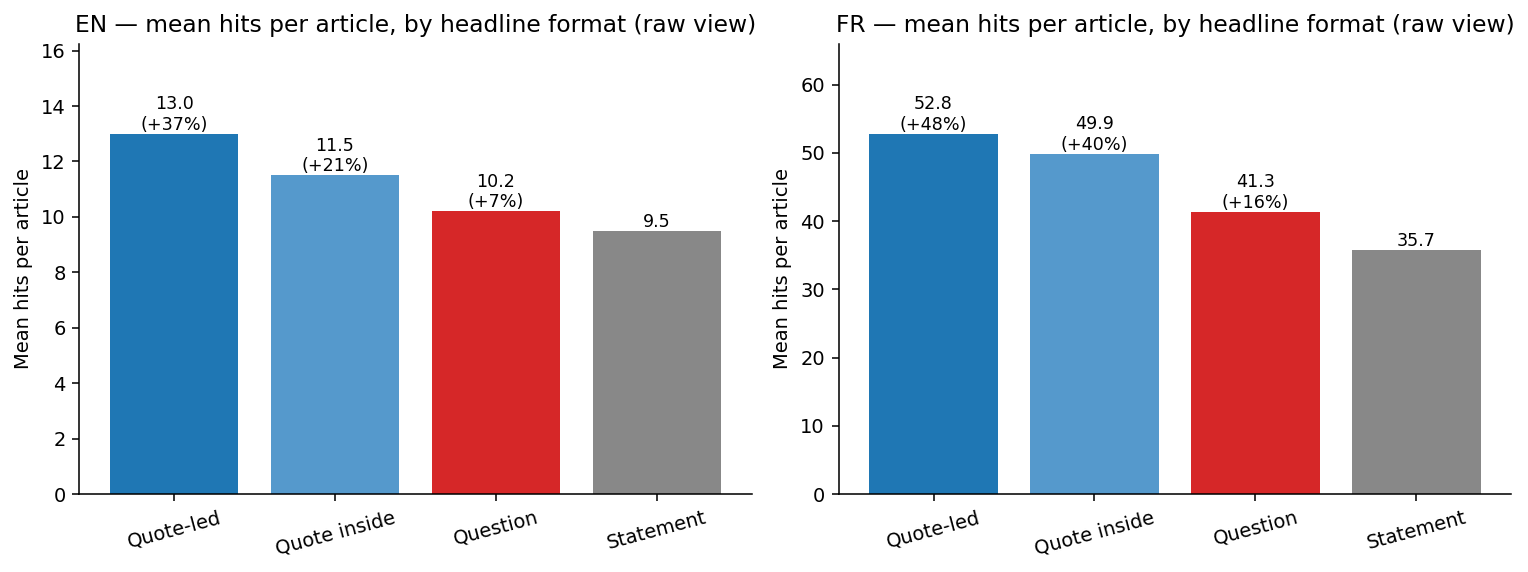
Analysis of 3.4 million editorial articles from November 2025 to May 2026, drawn from the 1492.vision Discover corpus, challenges common assumptions about headline effectiveness. Contrary to popular belief, the study found that headline format, such as quote-led versus declarative statements, is not an independent driver of visibility on platforms like Google Discover. Instead, the perceived impact of headline formats is largely a proxy for other factors, including the publisher, the target audience, and the specific Discover surface on which the article appears. The research utilized a metric of "hits per article," representing how often an article was observed across the 1492.vision fleet, as a proxy for visibility, rather than direct click data from Discover. The study excluded content from YouTube and X due to their distinct headline conventions. The large dataset size was crucial for enabling detailed segmentation by publisher, Discover surface, topic, and language, which was necessary for drawing meaningful insights. When all publishers were pooled together, a gradient emerged showing quote-led headlines with the highest mean hits, followed by statements, and then question-based headlines, but this observed effect was found to be a symptom of underlying publisher and audience choices, not a direct result of the headline structure itself. The phenomenon of Simpson's paradox was identified as a key demonstration of this statistical artifact throughout the dataset, illustrating how aggregated data can obscure underlying trends.
Original source — read the full reporting at the publisher:
Read on Search Engine LandGet the weekly AI digest
AI news + new model releases, weekly. Drafted by our agents, reviewed by humans.