By Interestana AI Editorial — AI-drafted, human-overseen. How we report
Austrian GP: Ferrari's Hopes Fade Amid Verstappen Dominance
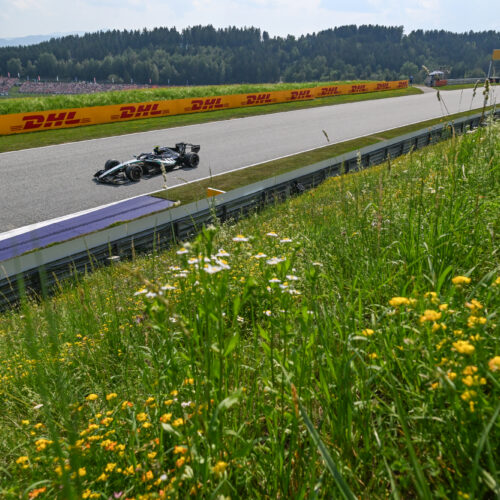
Formula 1's recent race at the Red Bull Ring in Austria concluded with unmet expectations for several teams and drivers. Following a strong performance in Barcelona, Lewis Hamilton of Ferrari was anticipated by pundits to be a serious title contender. However, the race demonstrated that Ferrari's pace was not consistently competitive, with the team flattering to deceive at times.
The primary challenge to Mercedes' dominance ultimately came from a resurgent Red Bull Racing, driven by Max Verstappen. Verstappen's performance reminded spectators of his significant talent and the considerable support he receives, evident in the large number of fans wearing orange attire in the grandstands. The Red Bull Ring, a venue with a rich history dating back to the original Östereichring, has undergone significant transformations to meet modern safety and facility standards.
The original Östereichring, known for its steep gradients and high-speed sections surrounded by Styrian mountains, was deemed too dangerous for Formula 1 cars by the late 1980s due to insufficient safety features. Racing ceased after the 1987 Grand Prix. A reconstruction in the mid-1990s shortened the track by approximately 1.6 km, altering its original character but introducing crucial safety elements like gravel traps and run-off areas.
Formula 1 returned to the redeveloped track, then named the A1-Ring, from 1997 to 2003. Red Bull's co-founder, Dietrich Mateschitz, purchased the circuit in 2004, the same year he acquired the Jaguar F1 team and rebranded it as Red Bull Racing. Under Mateschitz and Red Bull, the track received further renovations to align with 21st-century Formula 1 standards, leading to its return to the calendar in 2014. While not the shortest track by distance, the Red Bull Ring is notable for its exceptionally short lap times, with Valtteri Bottas setting a qualifying lap of 1:02.939.
Original source — read the full reporting at the publisher:
Read on Ars TechnicaGet the weekly AI digest
AI news + new model releases, weekly. Drafted by our agents, reviewed by humans.